
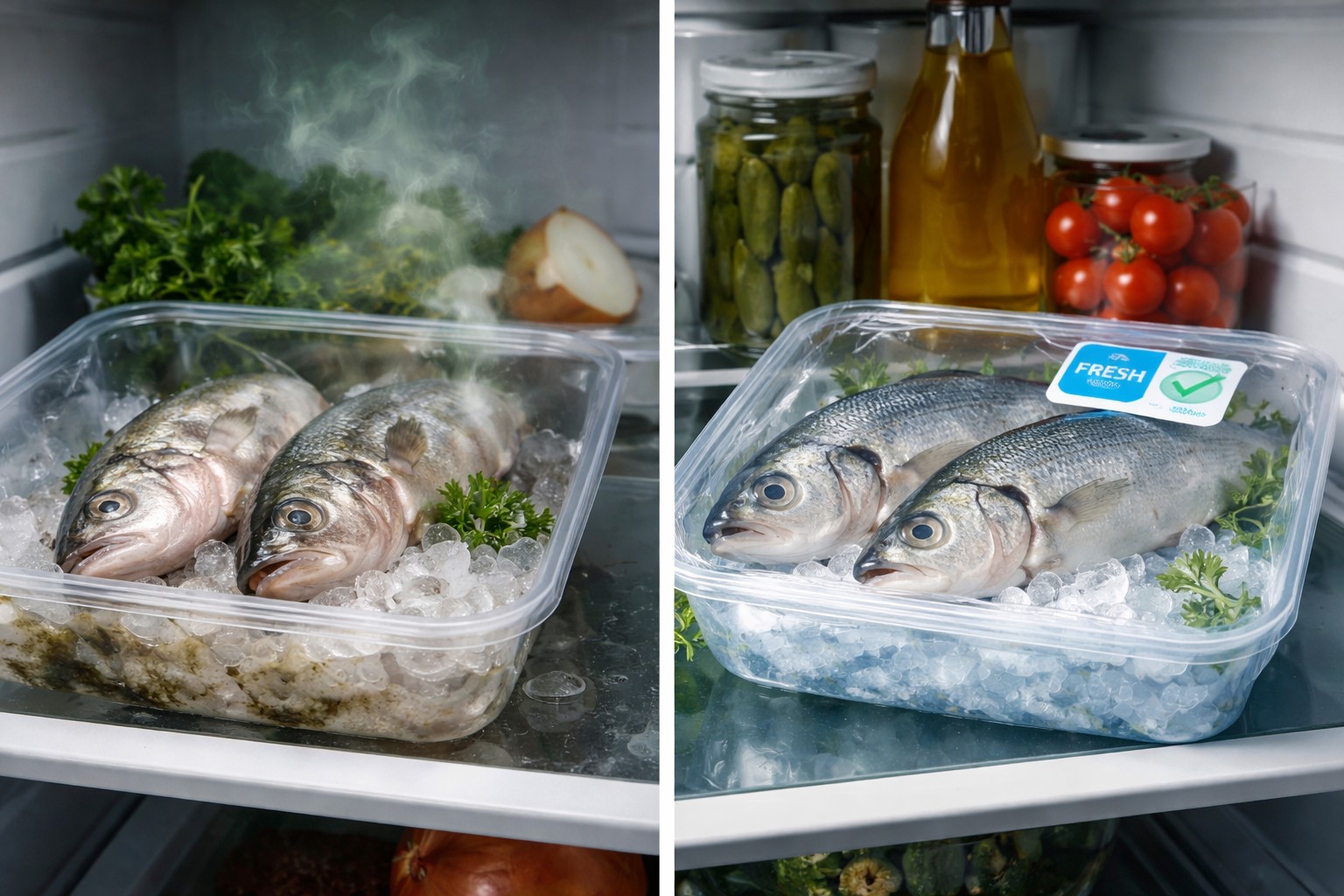
Fresh fish is an extremely delicate product that requires a special approach immediately after purchase. Many people simply put it on the refrigerator shelf in store-bought packaging, but this main mistakeleading to loss of taste and rapid spoilage. The usual temperature in a household refrigerator (+4…+5°C) is too high for seafood, which is more comfortable at temperatures from -2°C to 0°C. To preserve the juiciness and structure of the fillet, you need to create special conditions.
Preparation before storage
The first rule is dryness. Moisture remaining on the scales or fillets is an ideal breeding ground for bacteria. Immediately after returning home, the fish must be washed with cold water and then dried thoroughly. paper towels from all sides, including the abdominal cavity. If you bought an uneviscerated carcass, the insides must be removed immediately: they are the ones that spoil first and give bitterness to all the meat.
Creating an Ice Pillow
Since the temperature in the refrigerator is not low enough, it must be lowered locally. The ideal way is to use crushed ice. Take a deep container, pour a layer of ice on the bottom, place the fish on top (preferably through a layer of parchment or film) and sprinkle ice on top. This design allows you to maintain a temperature of about 0°C, which extends the freshness of the product to 2-3 days instead of the standard day. Be sure to drain melt water as it appears.
Refusal of polyethylene
Storing in a tightly tied plastic bag literally “suffocates” the fish. Without air access, the product quickly suffocates, acquiring an unpleasant sticky coating and odor. Better to use:
-
parchment paper or foil (wrap loosely).
-
Containers with ventilation.
-
Vacuum packagingif you plan to store fish for up to 4-5 days.
The vacuum completely eliminates contact with oxygen, slowing down the oxidative processes of fats, which is critical for fatty varieties like salmon or mackerel.
Features of freezing
If you do not plan to cook in the next couple of days, it is better to freeze the fish immediately. To avoid “cold burn” and drying out, use the method glazing. Dip the carcass in ice water and place it in the freezer until the crust hardens, then repeat the procedure again. The ice shell will reliably protect the pulp from contact with dry frosty air, keeping the texture of the fibers unchanged for several months.
Proper organization of space and temperature allows you to enjoy fish dishes without risk to health or loss of product quality.
About the Author