High humidity in an apartment is not only discomfort, but also a serious risk to the health and safety of the renovation. Dampness creates an ideal environment for bacteria to multiply, mold and fungus, which can cause allergic reactions and respiratory diseases. In addition, excess moisture spoils furniture, wallpaper and textiles. There are several proven ways to normalize the microclimate, from the use of specialized equipment to the use of improvised means.
Use of climate control equipment
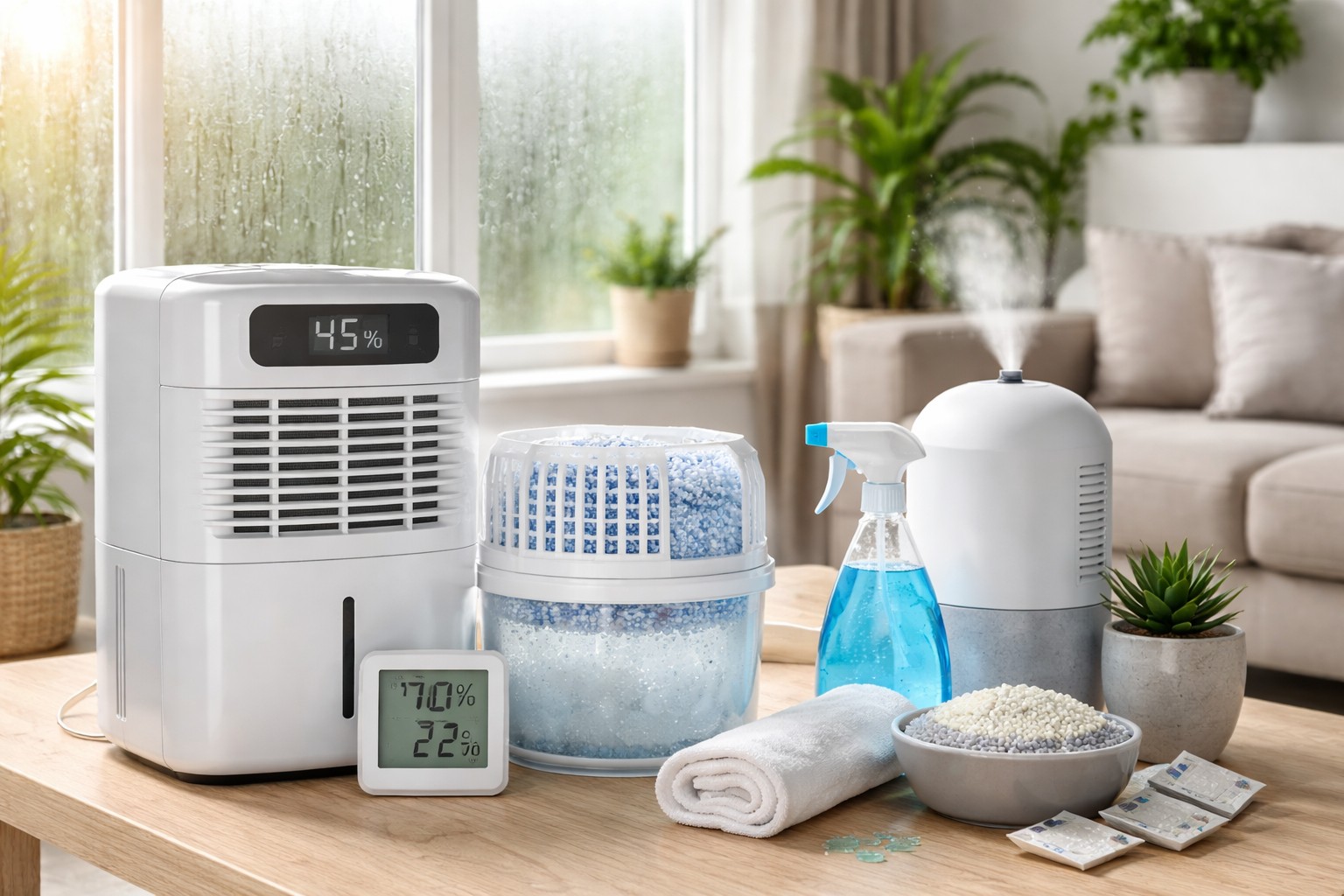
The most effective way to quickly reduce humidity levels is to use dehumidifier. This is a device specially designed to condense moisture from the atmosphere and collect it in a special tank. When choosing a device, it is important to pay attention to its performancewhich must correspond to the area of the room.
If you have installed air conditionercheck its modes. Most split systems have a function Dry (drying), which works on the principle of radiator cooling: moisture from the air condenses on it and is removed through the drainage system. This is an excellent solution for the summer, when it is necessary not only to dehumidify, but also to cool the air a little.
Will help in winter heaters and oil radiators. By heating the air, they naturally reduce its relative humidity. However, it is important to maintain a balance here and not to dry the air too much, as this can negatively affect the mucous membranes.
Folk remedies and absorbents
If you don’t have special equipment at hand, you can use substances that have hygroscopic properties. Excellent natural absorbent is normal salt. It can be poured into small containers or fabric bags and placed in the corners of the room where the greatest dampness is observed. The salt will absorb moisture from the air, but will need to be replaced regularly once it hardens or gets wet.
Other available moisture absorbers:
-
Rice. Cereals absorb water well, so bowls of rice are often placed in closets with clothes.
-
Activated carbon. In addition to drying, it perfectly neutralizes unpleasant musty odors.
-
Silica gel. Bags of these granules are often found in shoe boxes, but they can be purchased in larger quantities and used to dehumidify shelves or drawers.
Adjusting household habits
Huge amounts of moisture are released into the air during daily activities. To reduce the load on the microclimate, it is worth reviewing some habits. For example, drying wet laundry the room is one of the main sources of dampness. If possible, dry things on the balcony, outside, or use a dryer.
Be sure to turn on the kitchen hood and cover the pots with lids to prevent steam from spreading throughout the apartment. It is also important to monitor the condition of the plumbing: even a small leak in pipes or a constantly dripping faucet can significantly increase the level of humidity in the bathroom and toilet.
Ventilation and airing
No methods will be effective if the air exchange in the apartment is impaired. Regular ventilation – the key to a healthy microclimate. Open the windows at least twice a day for 10-15 minutes, creating a draft to quickly update air masses.
Check the work of the common house ventilation shaft. To do this, just bring a sheet of paper to the grate: if it sticks, there is traction. If a leaf falls, the vent is clogged and requires cleaning. In rooms with plastic windows that close hermetically, it is advisable to install supply valves that provide a constant flow of fresh air without loss of heat.
Controlling humidity levels requires a comprehensive approach that combines proper ventilation, the use of moisture absorbers and, if necessary, the use of specialized equipment to create a comfortable atmosphere.
About the Author