Even the cleanest refrigerator or kitchen cabinet can fall victim to forgotten food. Spoiled meat, sour soup or rotten vegetables are left behind persistent aromawhich does not disappear even after the “culprit” itself is ejected. Regular ventilation is often powerless here, since bacteria and odor molecules eat deeply into plastic and other surfaces. To restore freshness, you will need an integrated approach and the use of proven products that can be found in every kitchen.
Source elimination and primary treatment
The first step is to get rid of the spoiled product. It is important not to just throw it in the trash, but to pack it in sealed bagto prevent the stench from spreading throughout the kitchen. After this, you should completely empty the shelf or drawer where the product was stored.
A common mistake is wiping the area with a regular damp cloth. Water does not kill the bacteria that causes the putrid odor. For primary processing it is best to use table vinegar solution in a 1:1 ratio with water. Acetic acid perfectly neutralizes organic odors and disinfects surfaces.
Natural absorbents to combat residual ointment
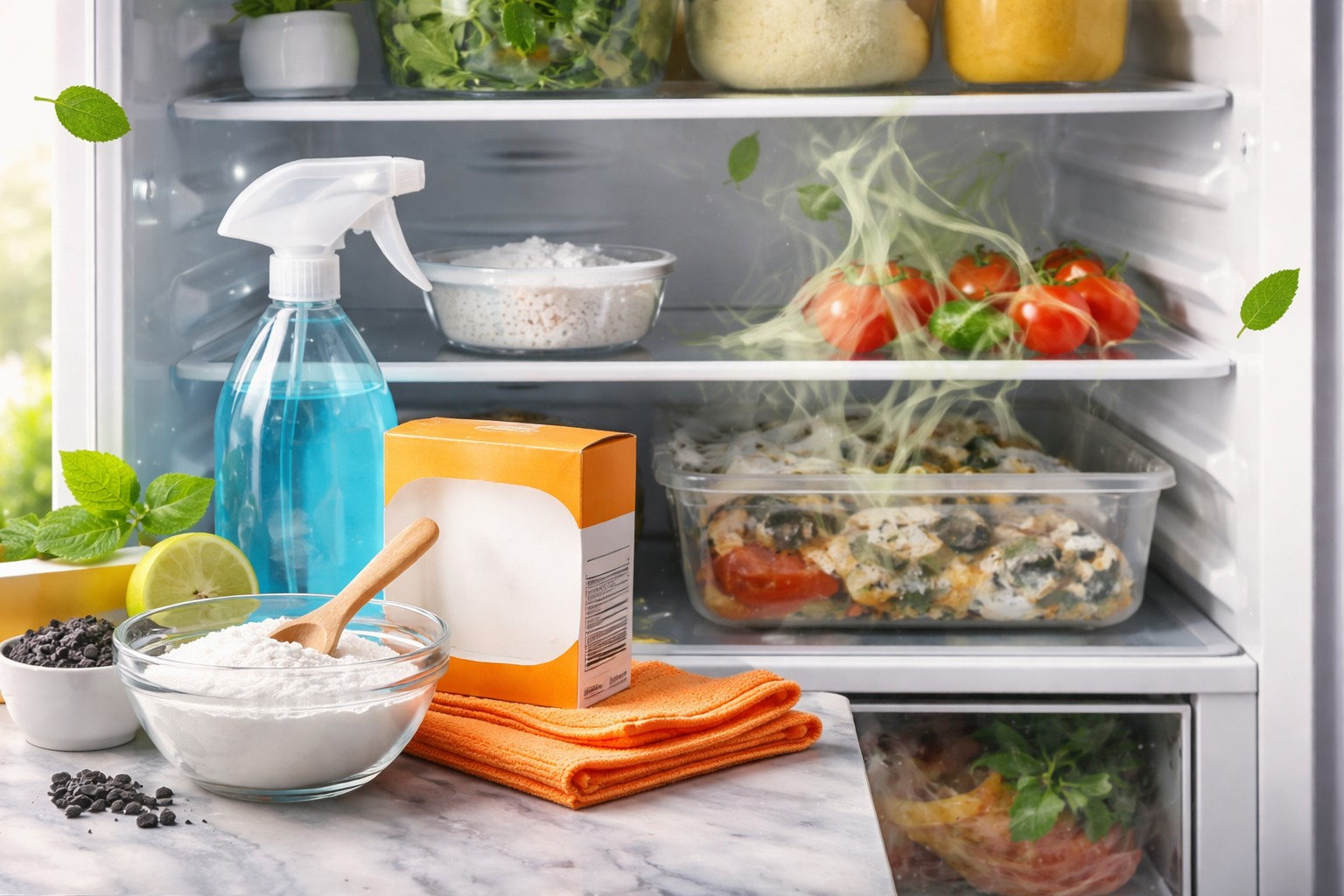
If after washing the smell is still felt, sorbents will come to the rescue. These are substances that can absorb volatile aromatic compounds. It is not necessary to buy expensive chemicals; effective products are at hand:
-
Baking soda. Pour baking soda into a small saucer and leave it in a closed space (refrigerator or closet) for a day. It perfectly absorbs sour odors.
-
Activated carbon. Grind 10-20 charcoal tablets into powder and also leave on the shelf. This is one of the most powerful air purifying filters.
-
Coffee beans. Freshly ground coffee or grounds have a strong aroma that displaces unpleasant odors, working simultaneously as a sorbent and flavoring agent.
-
Rye bread. Pieces of black bread, laid out on the shelves, help cope with the specific smell of stale food.
Radical measures for stubborn odors
In cases where spoiled food, such as meat or fish, has leaked into the cracks or sealing gum, folk remedies may not be enough. Here you will need ammonia. A few drops of ammonia in a glass of water will help remove the worst odors. However, after such treatment, it is necessary to thoroughly ventilate the room and rinse the surface with clean water.
Another powerful tool is lemon juice. A rubbing mixture of vodka and lemon juice not only removes the smell, but also kills mold fungi that could begin to multiply next to the spoiled product.
Regularly checking expiration dates and using closed storage containers will help avoid similar problems in the future. Cleanliness and the absence of foreign odors directly affect the perception of product quality and household appetite. Timely inspection of shelves and the use of simple sorbents guarantee the preservation of freshness in your kitchen.
About the Author