Many people are faced with a situation where even careful foot hygiene and regular shoe washing do not prevent the appearance of a specific aroma. Often the problem lies not in the person himself, but in the structure of the material that is under our feet. The insoles act as a hidden storage device that keeps bacteria away much more effective than sock fabric or boot lining.
Porous structure acts as a trap
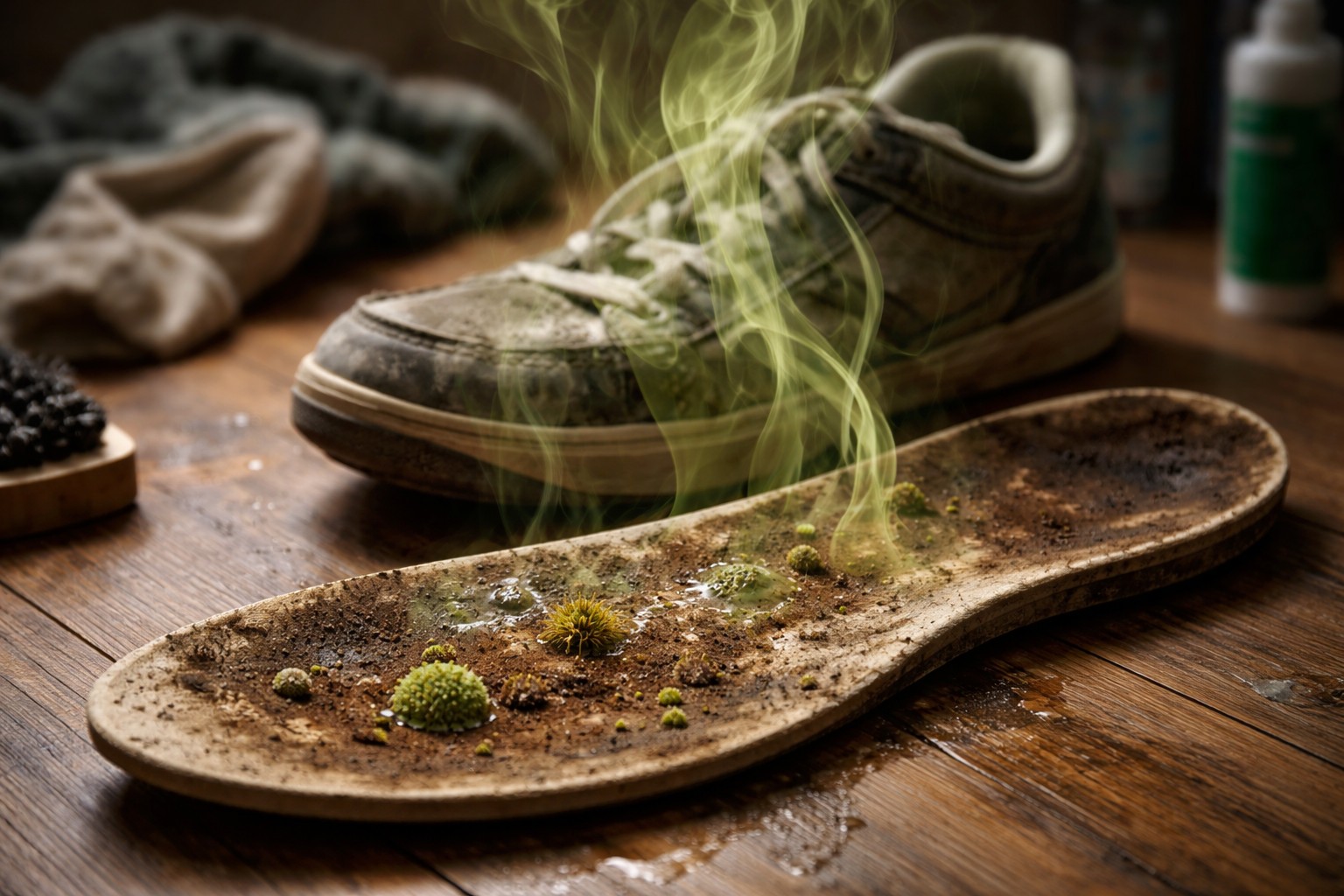
Most modern insoles, especially sports and orthopedic ones, have multilayer porous structure. This is necessary for shock absorption and walking comfort. However, it is these microscopic pores that become the ideal reservoir for moisture. Unlike smooth surfaces, porous material absorbs sweat and prevents it from quickly evaporating, creating a “greenhouse effect” inside the shoe.
Bacterial film formation
The main culprit of odor is not the sweat itself, but the waste products of bacteria. A stable insole is formed inside the porous insole. biofilm. These are colonies of microorganisms that are fixed deep in the fibers and become practically invulnerable to surface cleaning. Conventional drying removes moisture, but the bacterial base itself remains inside, ready to become active at the slightest increase in humidity and temperature.
The problem of synthetic materials
The materials from which budget insoles are made often have low hygroscopicity. Cheap synthetics or rubber do not wick away moisture, but block air exchange. As a result, sweat accumulates at the interface between the foot and the insole, saturating the upper fabric layer. Natural materials, such as leather or felt, cope with this task better, but over time they also accumulate organic skin particles, which serve as food for microbes.
Why washing rarely helps
Even if you wash the insoles in the machine, water and powder often cannot remove dirt from the deep layers of the foam material. Detergents only mask the smell with fragrances for a short time. Once the fragrance wears off, the old smell returns because it the source is deep within. Over time, the structure of the material is destroyed, microcracks appear in it, where dirt and bacteria accumulate even more actively.
The only reliable way to combat this problem is to regularly replace the accessory, since it is almost impossible to completely clean the porous structure of deeply ingrained organic particles.
About the Author