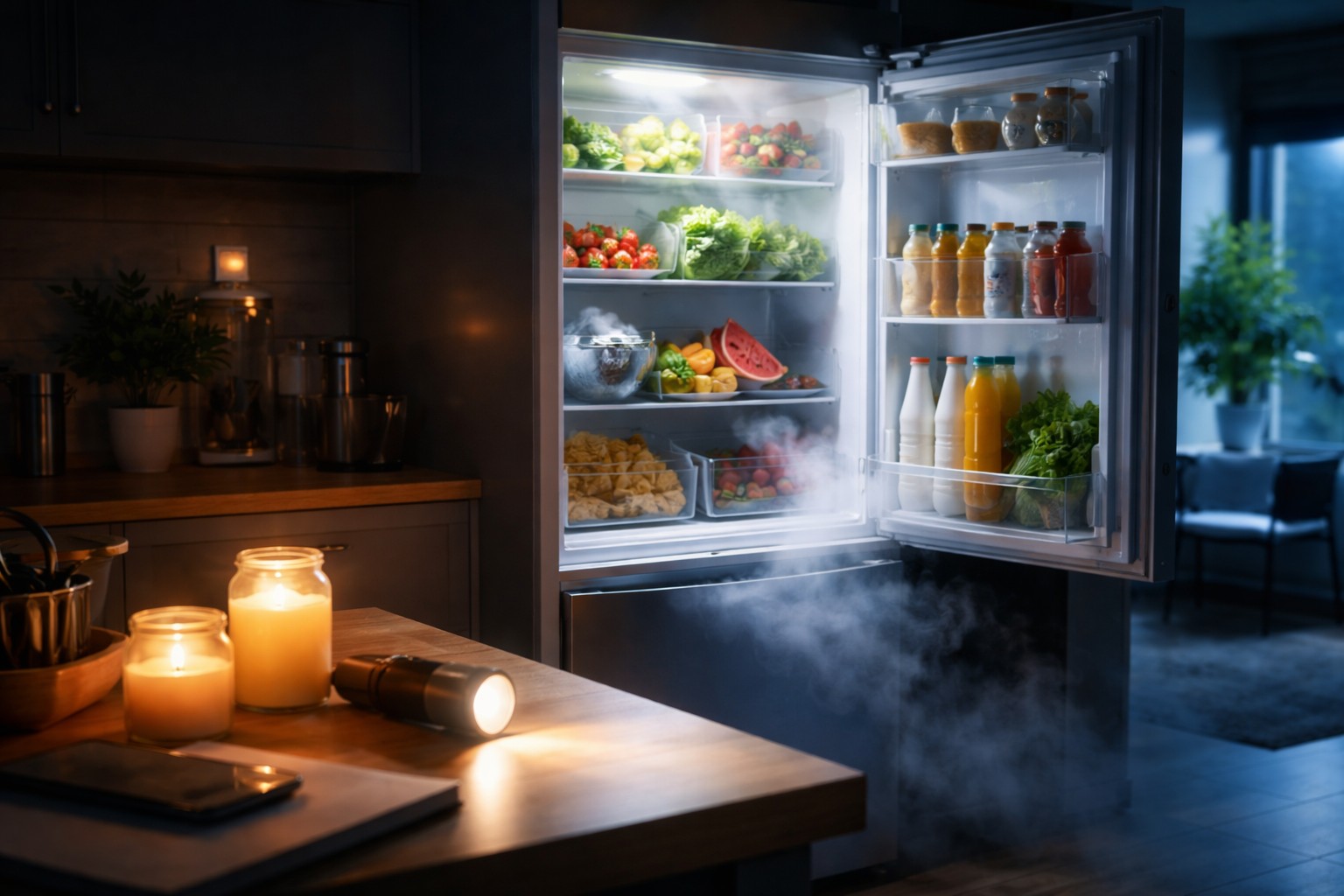
It seems like leaving your refrigerator door open is a surefire way to ruin your food and rack up a huge electric bill. Since childhood, we were taught to close the chamber tightly so as not to let out the cold. However, there are specific scenarios when violating this rule is not only acceptable, but also critically needed for the safety of your equipment.
Prevention during departure
The main reason to deliberately leave the door open is when you are away from home for a long time, such as on vacation or a business trip. If you plan to unplug the appliance to save energy, a closed door will turn it into an incubator for bacteria. Without compressor operation and air circulation The temperature inside the chamber quickly rises.
In a closed, damp space it grows instantly black mold. It affects plastic shelves and eats into the rubber seal. It is almost impossible to get rid of the musty smell after such “preservation”, even using strong chemicals. A lock or a simple stopper that prevents the door from slamming provides the necessary ventilation.
Preserving the elasticity of the seal
Rubber cuff that provides tightnessloses its properties over time. If the refrigerator is turned off and tightly closed for a long time, the rubber compresses and deforms under constant pressure without temperature changes, which usually keep it in working tone.
By leaving a small gap, you reduce the load on sealing rubber. This prevents it from cracking and sticking together. In older models, this also helps to avoid corrosion on the metal parts of the case, which may be damaged by condensation accumulated inside.
Proper defrosting and drying
Even modern No Frost systems require periodic maintenance and hygienic cleaning. After washing the interior surfaces, it is not enough to simply wipe them with a cloth. Microscopic drops of moisture remain in cracks and corners.
Experts recommend leaving the refrigerator open for at least 2-3 hours after cleaning before turning it on. This allows the moisture to completely evaporate naturally. Turning on a wet appliance forces the compressor to work hard to remove excess moisture, which reduces service life household appliances.
Following these simple operating rules will help you avoid costly repairs and component replacements.
About the Author