
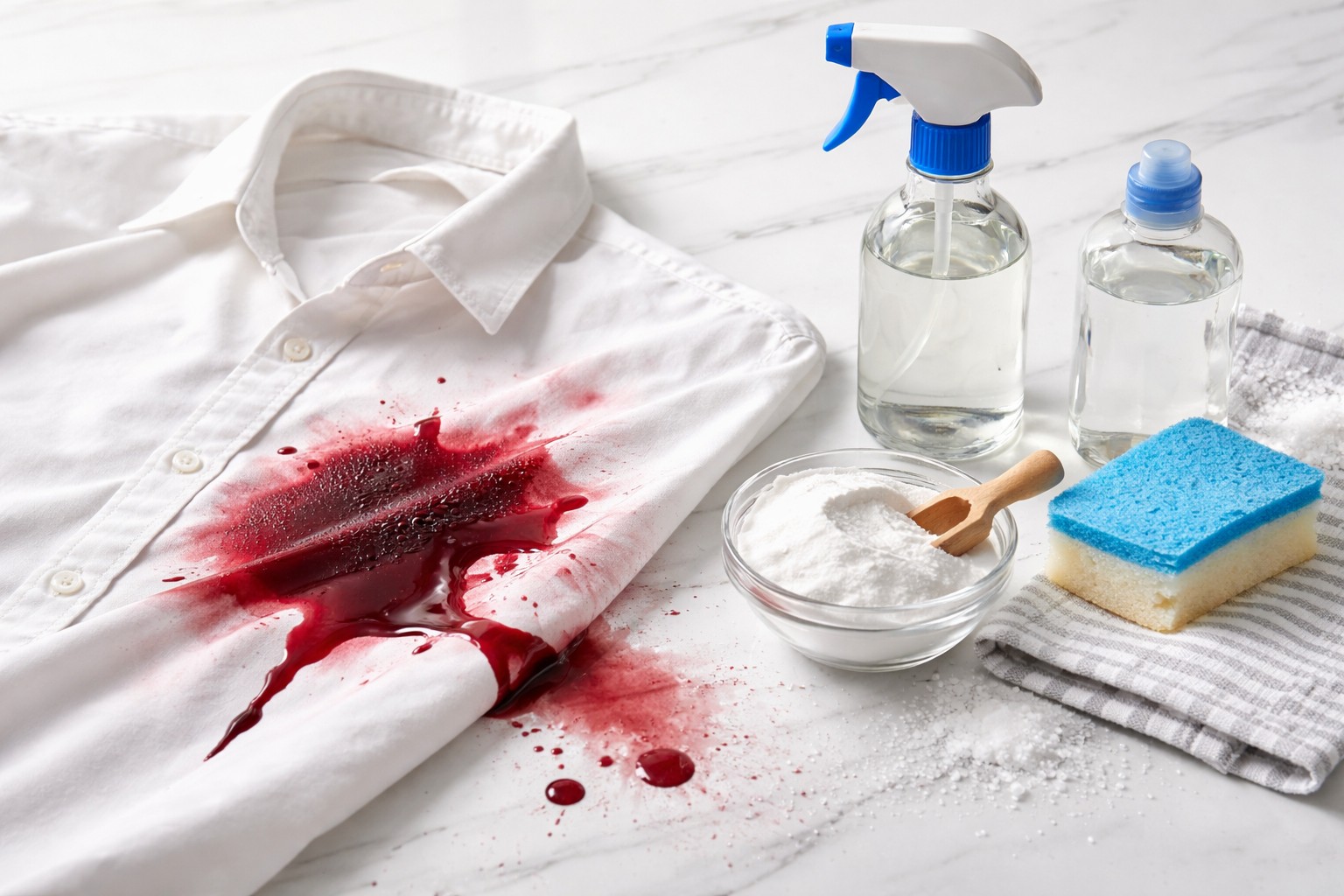
A spilled glass of wine is not a death sentence for your favorite blouse or expensive tablecloth if you act instantly. The main mistake that almost everyone makes is trying to wipe off the liquid with a napkin. This absolutely cannot be done, as you will only drive the pigment deeper into the fibers of the fabric. There are several proven ways to neutralize contamination using improvised means that can be found in any kitchen.
First aid for fresh contamination
The most important rule: don’t rub the stain. Instead, take a paper towel or clean, dry rag and gently get wet liquid. Your goal is to remove excess moisture so that the wine does not have time to absorb deeply. Move from the edges of the stain to the center so as not to increase the area of contamination. The sooner you start processing, the higher the chances of complete restoration of the item.
Using table salt or soda
This is a classic method that works through absorption. Once you have blotted away the bulk of the moisture, cover the affected area generously coarse salt or baking soda. These substances work like a sponge, drawing out the dye pigment from the fabric.
-
Leave the powder on the fabric for about 10-15 minutes.
-
You will see the salt or baking soda begin to turn pink.
-
Shake off the used layer and repeat the process if necessary until the salt stops changing color.
Boiling water method for cotton and flax
If something made of durable natural fabric, such as cotton or linen, has been damaged, it helps a lot boiling water. Stretch the fabric over a sink or large bowl so that the stain is in the center. Water the stain with boiling water from a kettle in a thin stream from a height. Hot water literally washes the pigment out of the fibers. Please note that this method not suitable for wool, silk or synthetics that can become deformed from high temperatures.
A solution of vinegar and liquid soap
An acidic environment neutralizes the violet and red pigments of wine well. Mix one tablespoon white vinegar with a teaspoon liquid dishwashing detergent and a glass of warm water. Apply the solution to the stain with a clean sponge and leave for 15 minutes. After this, gently blot the area with a damp cloth. Vinegar not only removes the stain, but also helps restore the fabric’s brightness without damaging the fiber structure.
How to deal with dried spots
If the wine has dried out, salt will no longer help. In this case, an effective remedy will be hydrogen peroxidemixed with detergent. However, be careful: peroxide has a bleaching effect, so test the mixture on an inconspicuous area of clothing first. Also, for old stains, soaking in warm milk or kefir for 30–40 minutes before the main wash works well.
After any of the described procedures, the item must be washed in a washing machine at a temperature suitable for this type of fabric.
About the Author