The smell of old paper and binding is a result of natural decay cellulose and lignin. Over time the pages absorb moisturehousehold dust and foreign aromas, turning a cozy library into a source of heavy, stuffy air. To restore freshness to books, it is not necessary to use professional chemistry; proven home methods are sufficient.
The main cause of bad odor is microscopic mold and high humidity. The first step is to dry the books thoroughly. To do this, they are arranged in a “fan” pattern in a dry, well-ventilated area, avoiding direct sunlight, which can cause the pages to turn yellow and become brittle.
Effective ways to combat odor:
-
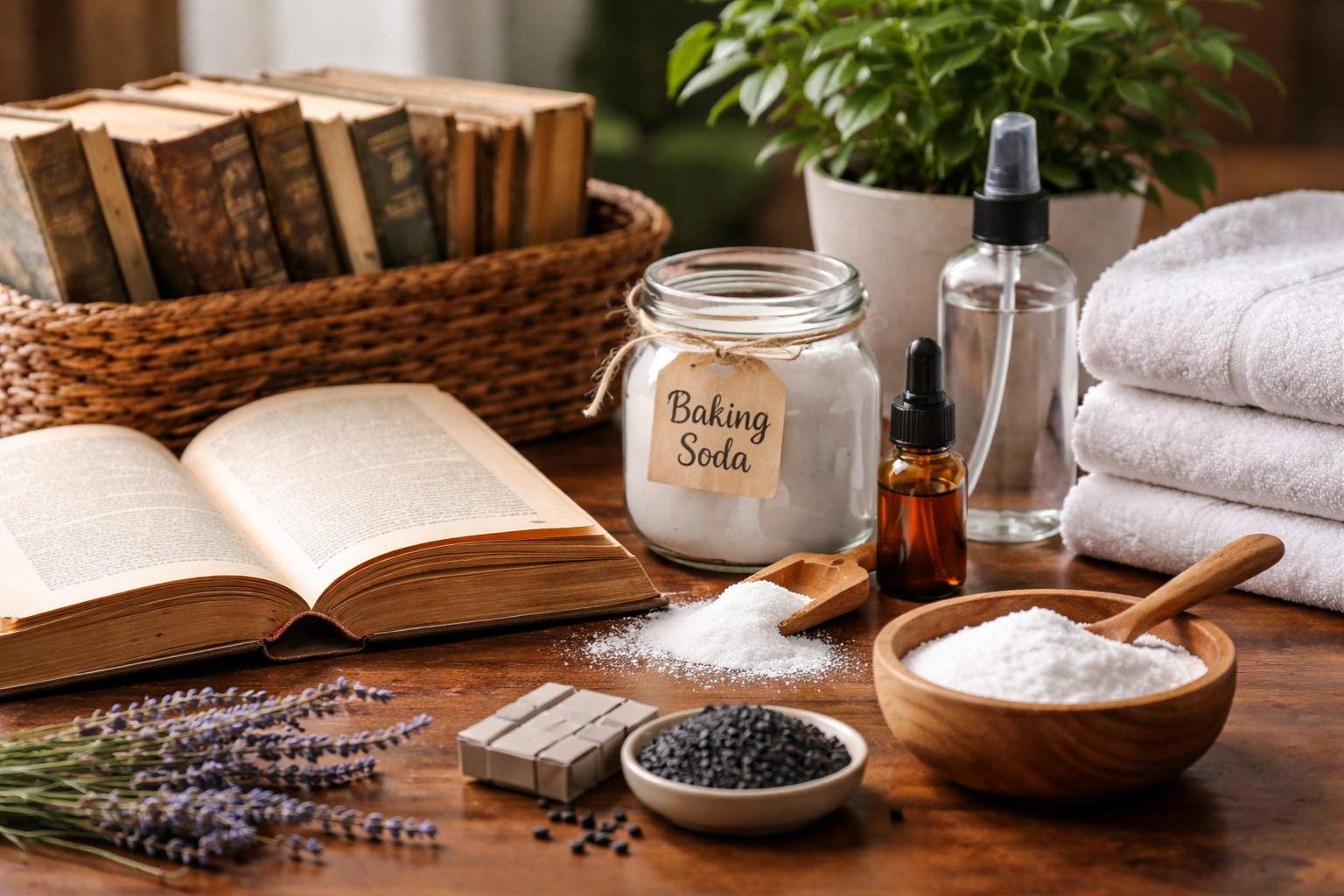
Baking soda. This is one of the best natural absorbents. The book is placed in an airtight container or bag along with an open container filled with soda. After a few days, the powder will absorb excess aroma molecules.
-
Activated carbon. Works on the same principle as baking soda. A few tablets placed next to the shelves will help keep the air in your home library clean.
-
Essential oils. A cotton wool moistened with lavender or tea tree oil, placed in a closet, not only masks the smell, but also serves as a preventive measure against the appearance of book pests.
-
Freezing. If the smell is caused by a fungus, briefly placing the book in the freezer (in a tight bag) will help stop the growth of microorganisms.
It is important to remember the storage rules: the shelves should not be close to the cold external walls of the house, and between the books you need to leave a small space for air circulation. Regularly cleaning the spines from dust with a dry microfiber cloth will significantly extend the life of paper publications.
The correct microclimate and the absence of excess moisture allow you to keep paper pages in perfect condition for decades.
About the Author