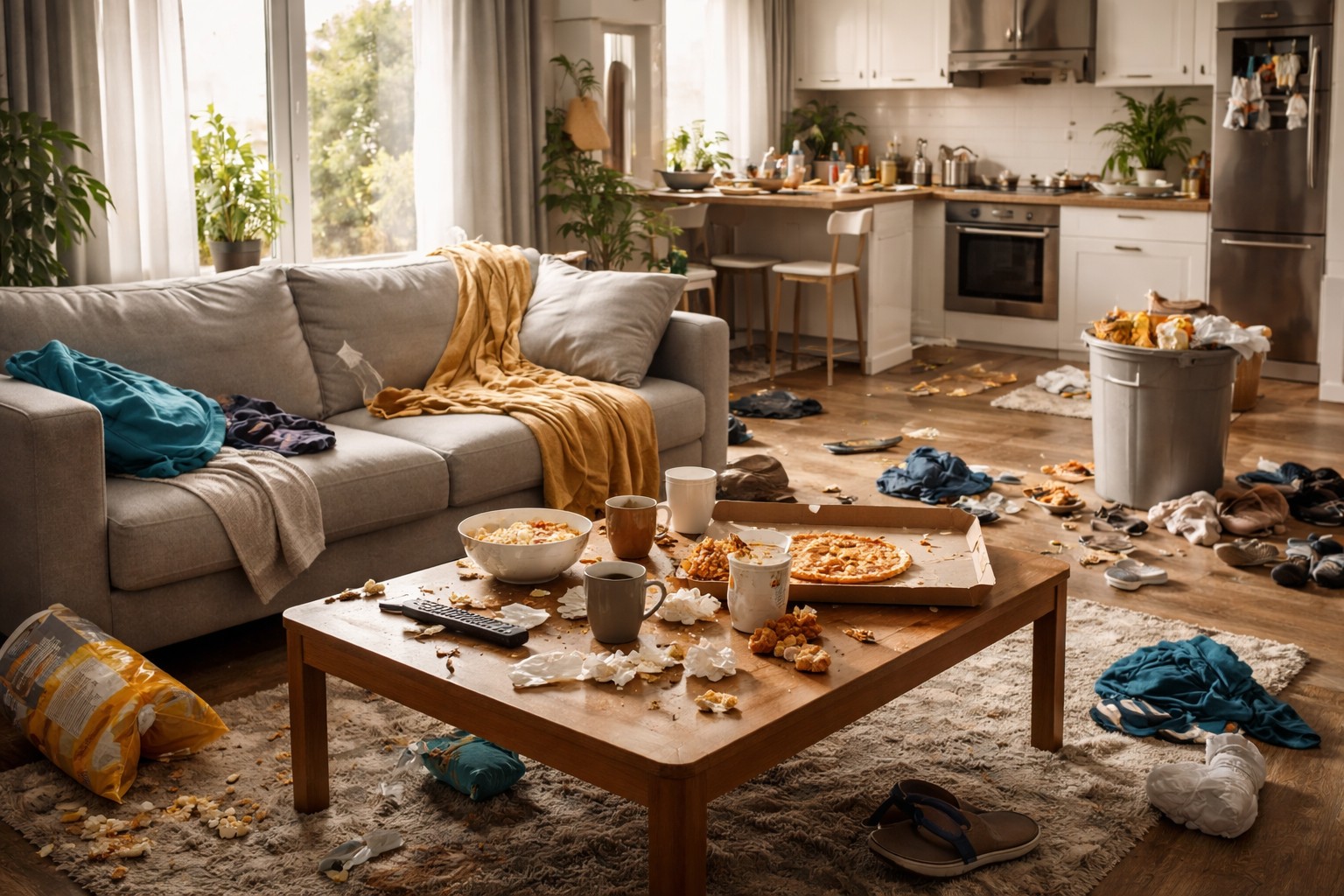
Many people experience the “rollback” effect: after a whole day spent on clearing spaceperfect order disappears after just 48 hours. The problem is that the scale one-time cleaning fights only visible consequences, but does not affect household habits. When we try to solve a chaos problem in one go, the brain perceives it as an ordeal rather than as a natural process.
Hidden reasons why cleanliness doesn’t last long:
-
Absence storage systems. If every item doesn’t have its “rightful” place, it will inevitably end up on a random surface, creating visual noise.
-
Accumulation critical mass. The more items in the house, the faster they mix with each other, turning any space into a warehouse.
-
Psychological exhaustion. After an exhausting marathon of cleanliness, a stage of compensation begins, when a person subconsciously allows himself to litter, because “I’ve already done a lot.”
-
Ignoring horizontal surfaces. Tables, chests of drawers and window sills instantly become overgrown with small things if you do not wipe them down daily.
To keep your home comfortable, it is important to change the focus from heroic efforts to micro-actions. Efficiency lies in unnoticeable operations that are performed automatically. When organization of everyday life is based on the principle of “clean up immediately”, the need for exhausting general cleaning disappears by itself.
Constantly maintaining home hygiene is much more important for psychological comfort than short-term shine after many hours of work. Order is not an end point, but a dynamic state that requires daily attention to detail.
About the Author