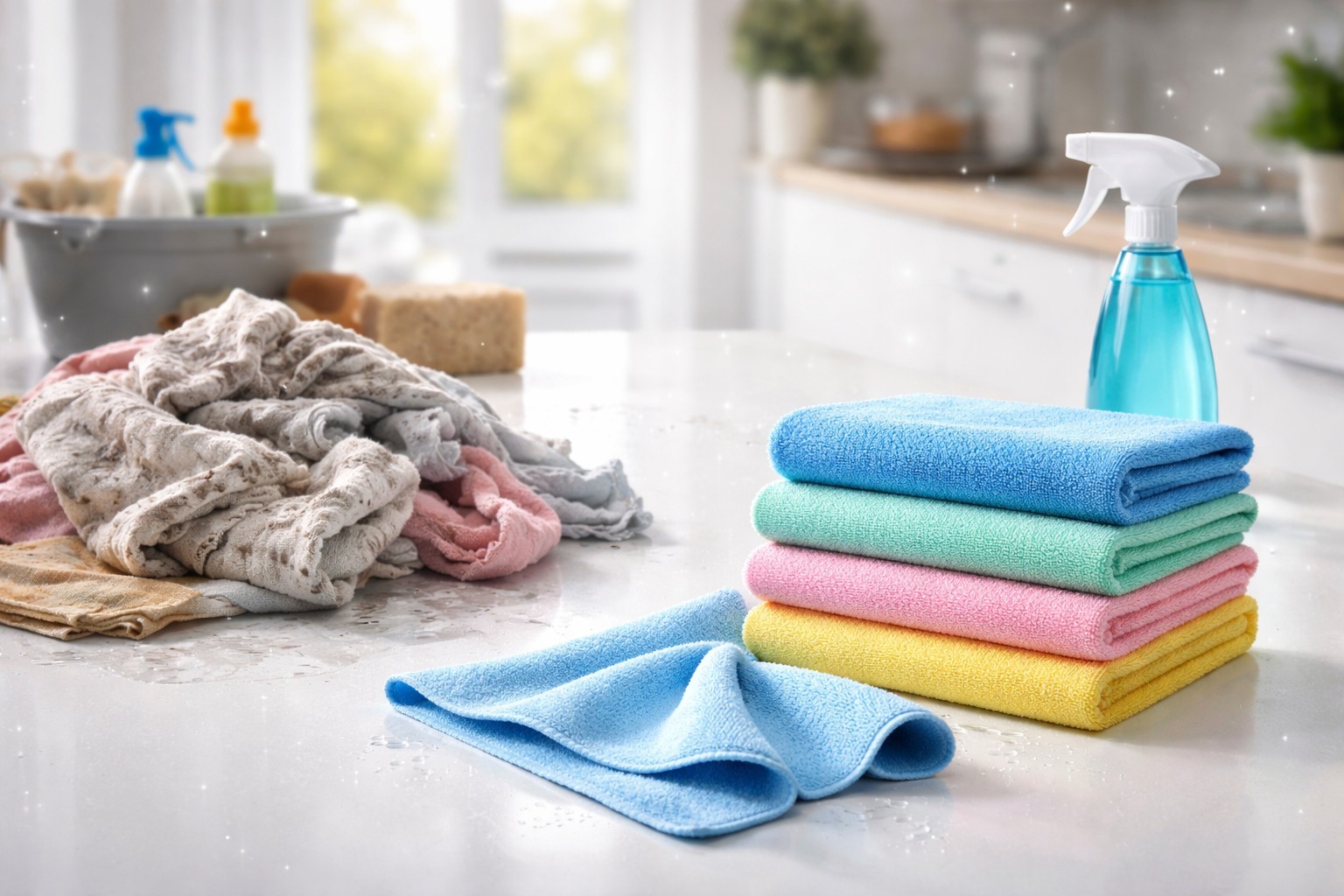
Many people are accustomed to using old T-shirts or cheap viscose napkins for cleaning, without thinking about how much more difficult this complicates the process. Modern technologies have long stepped forward, and microfiber has become a true standard of cleanliness. This is not just a fabric, but a complex tool that works at the microscopic level, allowing you to achieve the perfect result without extra effort.
The secret is in the fiber structure
The main difference between microfiber and cotton or synthetics is the structure of the thread. Each fiber is split into many microscopic wedges. During cleaning, these wedges act as micro-scrapers, grabbing dust and dirt into the fabric, rather than spreading them across the surface. A regular rag often simply moves debris from place to place, while microfiber holds it securely thanks to static electricityarising from friction.
Perfect cleanliness without chemicals
One of the main advantages of this material is the ability to avoid household chemicals. To remove most stains, including grease stains in the kitchen or fingerprints on mirrors, just lightly wet a cloth with water. Capillary effectcreated by the micropores of the fabric, allows you to absorb huge amounts of moisture and dirt. This not only saves money on buying sprays and gels, but also makes cleaning more efficient. environmentally friendly and safe for allergy sufferers.
Durability and savings
A high-quality microfiber cloth can survive hundreds of washes without losing its properties. Unlike viscose, which quickly tears and begins to smell unpleasant, synthetic fiber polyester And polyamide wear resistant. The main rule of care is not to dry such products on hot radiators and not to wash them with air conditioner, as this sticks the fibers together and deprives the fabric of its unique absorbent abilities.
The right equipment turns routine cleaning into a quick and easy process.
About the Author