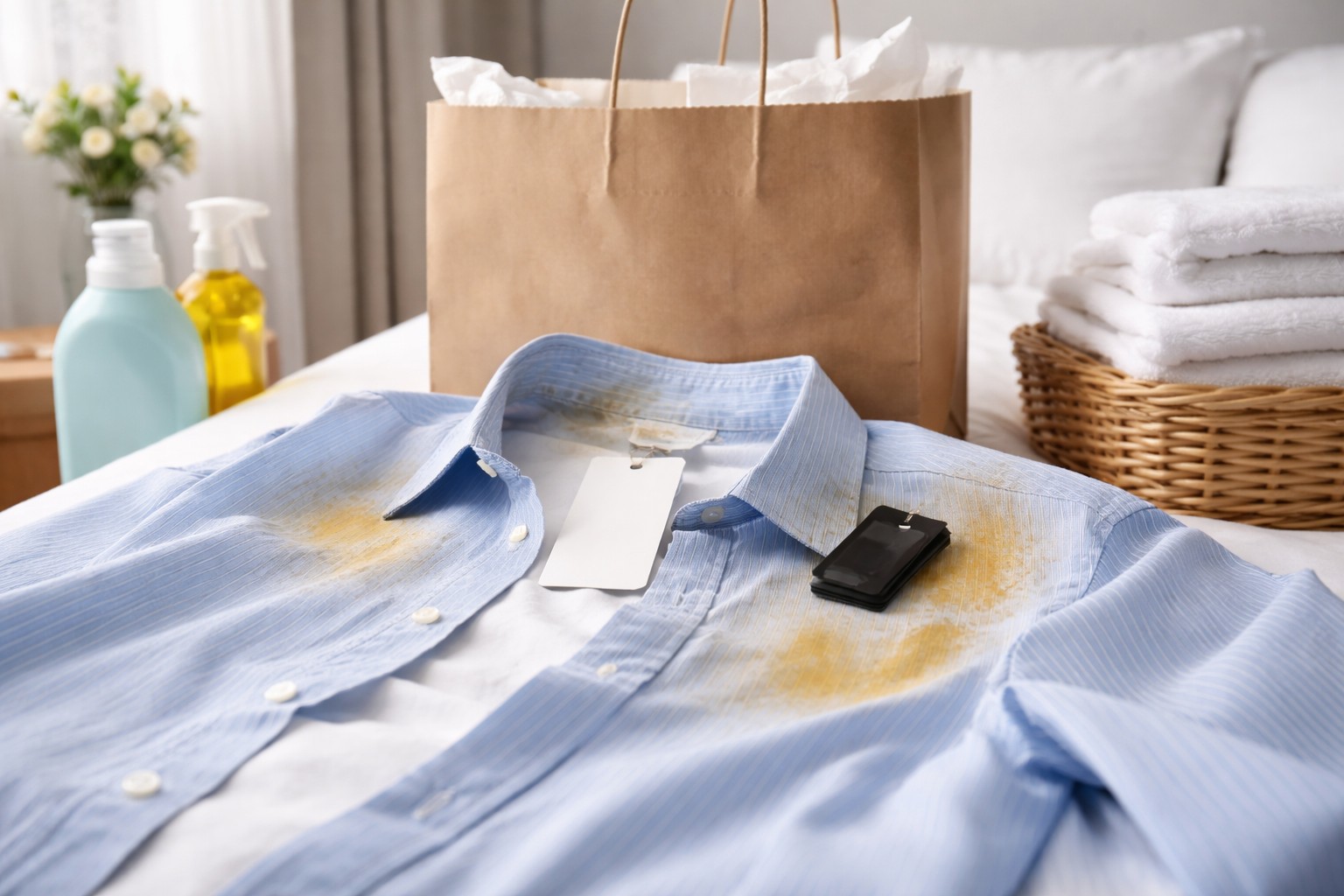
Many of us are tempted to put on something new right in the fitting room or immediately after returning from the store. It seems that the thing is absolutely clean, because it just came off the shelf. However, experts in the field hygiene And dermatology unanimously approve: preliminary washing – this is not a whim, but a necessity.
During the production process, fabrics are subjected to serious chemical treatment. To prevent clothes from becoming wrinkled during transportation, from becoming moldy in warehouses and maintaining their presentation, manufacturers use formaldehyde resins and various dressings. These substances in contact with skin may cause allergic reactionitching or persistent irritation, especially in areas of tight tissue.
In addition to chemicals, it is worth considering the path that an item takes before it gets into your wardrobe:
-
Fabrics are stored in huge, dusty warehouses.
-
Clothes pass through dozens of hands in sewing workshops.
-
Many people try on items in stores, creating a risk of transmission bacteria and skin infections.
-
Transportation in containers does not guarantee sterility.
Washing helps not only to get rid of excess chemicals and dust, but also to wash away excess dye. This prevents staining of leather and other clothing, and also makes the fabric fibers softer and more comfortable on the body. This rule is especially critical for children’s things and underwear that comes into contact with the most sensitive areas of the skin.
Careful hygienic treatment of new textiles is a basic rule of health care.
About the Author