Cast iron is a material that, despite the laws of modern kitchen fashion, remains the standard of reliability. Unlike nonstick coatings, which inevitably deteriorate over time, cast iron cookware has the unique ability to improve with each use. However, without proper attention, this metal turns into a regular piece of rusty iron, so understanding the mechanics of caring for it is a key skill for any cook.
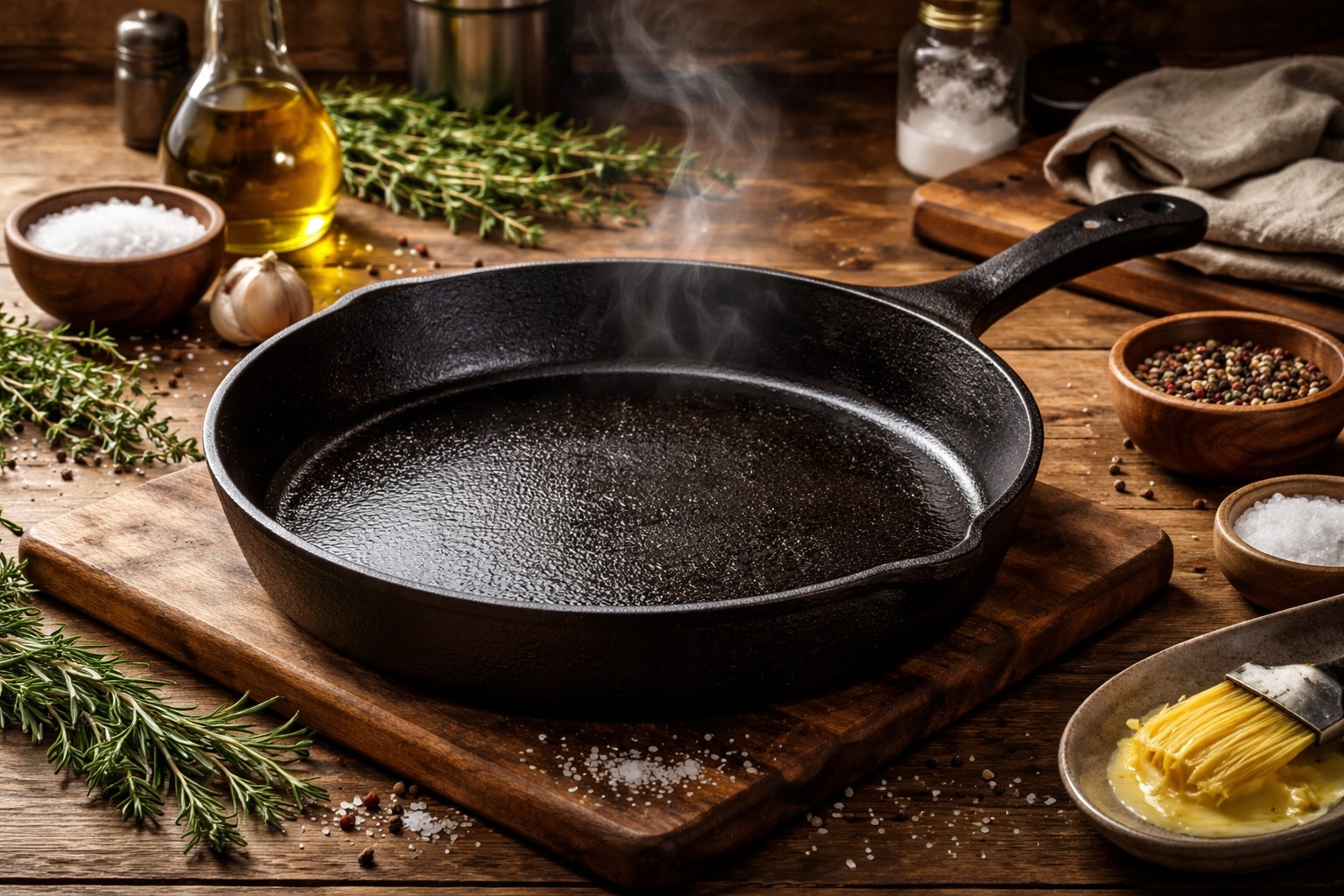
The main purpose of caring for such utensils is to create and maintain polymerized oil layerwhich is often called natural non-stick coating. This is not just fat, but the result of a chemical reaction in which oil molecules, under the influence of high temperature, combine with metal, forming a hard and smooth protective film.
Regular care of cast iron is necessary for several important reasons:
-
Protection from corrosion. The porous structure of the metal instantly absorbs moisture from the air, which leads to the appearance of red rust spots if the surface is not protected by a layer of oil.
-
Improvement taste qualities dishes. Cast iron has a high heat capacity, allowing food to fry evenly and acquire that golden crust that cannot be obtained in thin aluminum pans.
-
Budget savings. Properly prepared cast iron eliminates the need to buy new cookware every two to three years, since its resource is practically unlimited.
The process of maintaining the working condition of the product comes down to a few simple rules. After each meal preparation, it is important to thoroughly remove food residues without using harsh detergents that could dissolve accumulated food. patina. After washing, the dishes must be completely dried on the stove until all moisture has evaporated and a thin layer of vegetable fat must be applied.
If the cast iron looks dull or food begins to burn, this is a sure sign that the protective barrier has become depleted. In this case it is required calcinationwhich returns the surface to its original properties and deep black color. This ritual turns kitchen utensils into real heirloom artifacts that can last for decades.
The gradual accumulation of protective layers makes the surface so smooth that even the most capricious foods can be fried on it without the risk of damage. The durability of this material directly depends on the owner’s discipline in matters of hygiene and timely lubrication of the walls with oil. Well-prepared cast iron forgives many mistakes and remains the most effective tool for creating culinary masterpieces at home.
About the Author