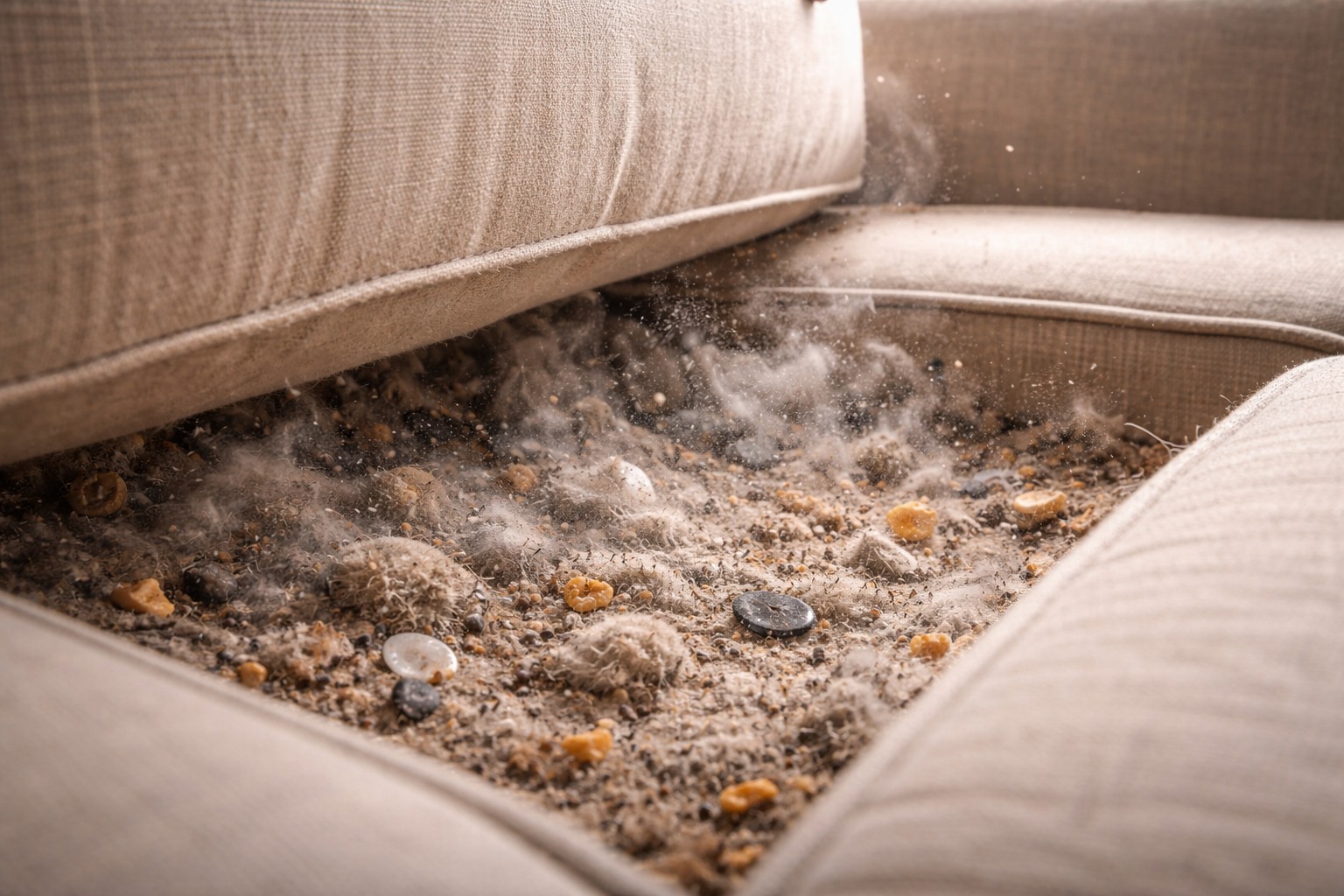
We often pay attention to the cleanliness of surfaces, forgetting about what is happening inside. upholstery And filler. Upholstered furniture is a real “dust collector” that works around the clock, accumulating microscopic particles of skin, pet hair and household dust. Without regular ventilation and deep cleaning, these layers become an ideal environment for the proliferation of microorganisms.
Indoor air can be several times dirtier than outdoor air precisely because of the stagnant odors and particles that an old chair or sofa “exhales” with each use. When you sit down on a soft surface, a bellows effect occurs: the allergens accumulated inside are thrown out under pressure, going straight into the respiratory tract.
Ventilating furniture helps solve several hidden problems:
-
Removing unnecessary humiditywhich inevitably accumulates in the filler fibers from the heat of the human body.
-
Prevention of occurrence mold and fungus in interior structures, especially if the furniture is located close to cold walls.
-
Neutralization of unpleasant odors that are deeply absorbed into porous materials.
-
Reducing the concentration of dust mites, for which lack of air circulation and warmth are the best living conditions.
It is especially important to provide fresh air access to furniture in winter, when heating dries out the upholstery, making it fragile, and in the summer heat, when humidity rises. Open windows and the creation of a draft allow you to renew the air gap inside the foam rubber or spring blocks.
Pure filler directly affects the quality of sleep and overall well-being, relieving morning nasal congestion and causeless cough. Regular air circulation extends the life of materials, maintaining their elasticity and preventing destruction of the fiber structure.
Proper care of home textiles and soft seating areas creates a healthy atmosphere in the living space.
About the Author