
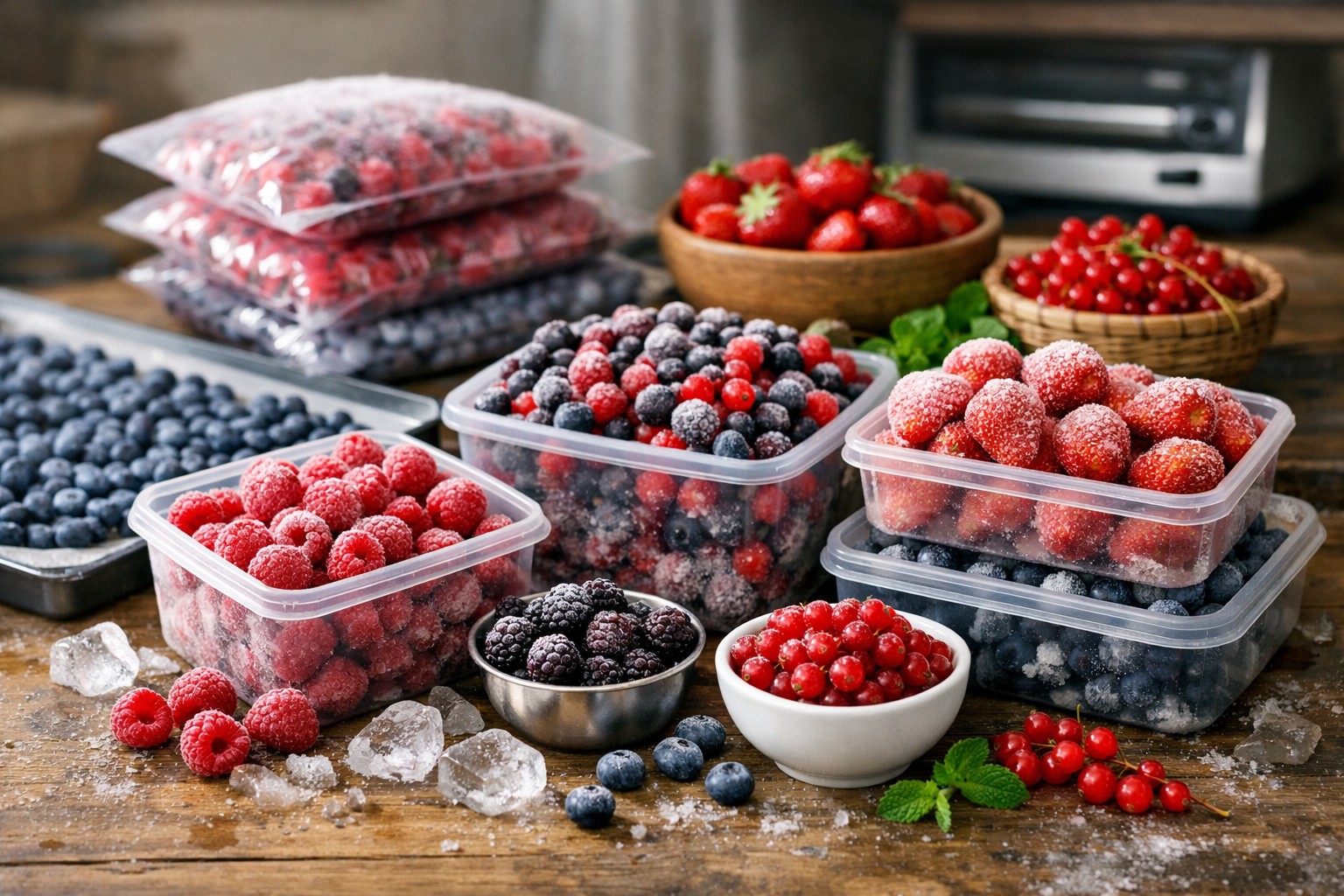
Many people make the same mistake – they simply throw the bag with the harvest into the freezer. As a result, instead of crumbly fruits, you get an ice lump, which, after thawing, turns into a shapeless mush. So that the berries retain their texture, vitamin composition and bright aroma, it is necessary to follow the cold technology.
The main rule of quality workpieces is dry headache. Before storing the fruits in the cold, they must be thoroughly washed, but be sure to dry on paper towels. Excess moisture instantly turns into frost, which destroys the delicate shell. If you plan to use the product to decorate desserts, it is best to freeze the berries in a single layer on a tray, and only after they have completely hardened, pour them into a permanent container.
For successful storage, it is worth considering the following nuances:
-
Use only sealed bags or containers. Constant contact with air leads to “freezing out” of moisture, causing the fruits to become dry and tasteless.
-
Try to remove excess air from the packaging. This will prevent the formation ice crystals inside the package.
-
Observe the commodity neighborhood. Berries easily absorb foreign odors, so they should not be kept near fish or meat without tight protection.
-
The optimal temperature in the chamber should not be higher than minus 18 degrees. Under such conditions, biochemical processes practically stop, allowing the product to remain useful until the next season.
It’s important to remember that re-freezing unacceptable. With each temperature change, the cell structure is completely destroyed, and the concentration of nutrients rapidly decreases. To avoid this, pack the berries in small portions, enough for exactly one use.
Properly prepared fruits retain up to ninety percent of all natural trace elements and delight with fresh taste even in the middle of winter. The secret to long storage is the absence of moisture on the surface and maintaining a stable temperature in the freezer.
About the Author