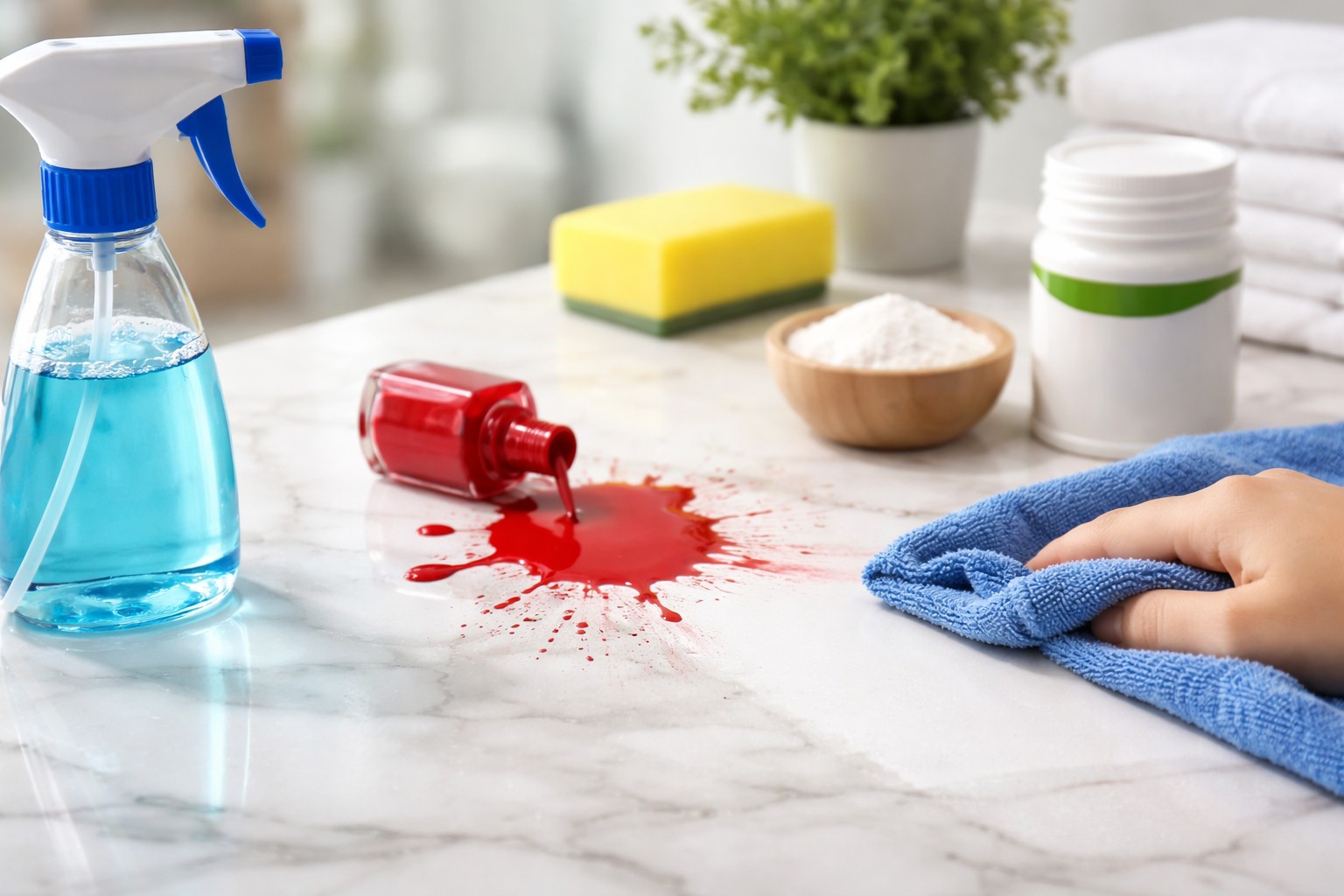
Accidentally spilled nail polish is not a reason to say goodbye to your favorite sweater or expensive sofa. The main rule in this situation is reaction speedsince the frozen polymer is much more difficult to remove. When working with textiles or hard surfaces, it is important to take into account the chemical composition of the material so that cleaning does not turn into final damage to the item.
To successfully remove pigment, you should prepare a minimum set of tools:
-
Nail polish remover based on acetone (only for natural fabrics).
-
Hydrogen peroxide (suitable for light-colored items).
-
Medical alcohol or disinfectant.
-
Ordinary hairspraywhich works great as a solvent on delicate surfaces.
-
Cotton pads and soft lint-free wipes.
If a drop falls on your clothing, the first thing to do is check the tag. If the fabric contains acetate or triacetateyou absolutely cannot use acetone – it will simply dissolve the fibers. Otherwise, place a paper towel under the stain and gently blot the stain from the edges to the center. This will allow solvent draw the color into the base without expanding the boundaries of the spot.
Effectively used for cleaning carpets or upholstery vegetable oil or alcohol. Apply a small amount to a cotton swab and gently remove layer by layer. After removing the base color, the treatment area should be washed with soapy water to remove any remaining grease or chemicals.
Hard surfaces such as laminate or wood require even more care. Here it is better to abandon aggressive chemistry in favor of school eraser or soda slurry. If the varnish has already dried, you can carefully pry it off with a plastic card, being careful not to scratch the protective layer of the furniture.
A competent choice of product and careful movements allow you to restore an item without going to the dry cleaner. The correct sequence of actions guarantees cleanliness even with the most stubborn dirt.
Household chemicals and available products can handle most cosmetic stains, provided precautions are taken.
About the Author