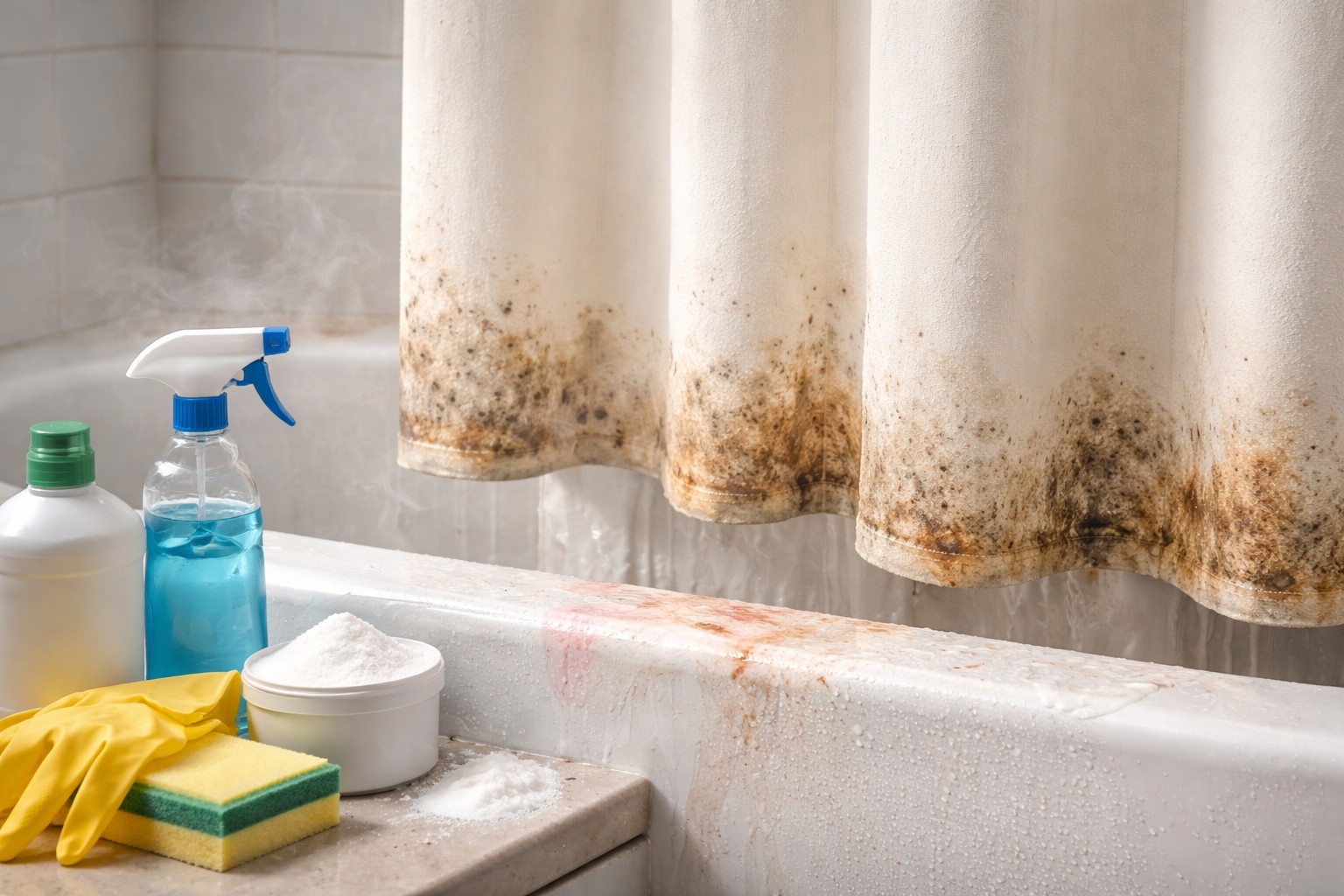
Many people notice that over time a specific appearance appears in the bathroom. musty smellthe source of which turns out to be an ordinary curtain. This is not just an aesthetic problem, but a signal that an entire ecosystem has formed on the surface of the material.
The main causes of odor
The main culprit of unpleasant odor is high humidity. The bathroom is an ideal environment for the proliferation of microorganisms that actively colonize the folds of the curtains.
-
Mold and mildew. In conditions of constant steam and poor ventilation, fungal colonies appear on the material (especially vinyl and polyester). They release spores and waste products that have a characteristic “basement” smell.
-
Bacterial plaque. Soap scum, particles of epidermis and body fat settle on the bottom of the curtain. This organic cocktail serves as a breeding ground for bacteria, which release gases during the decomposition of organic matter.
-
Lime deposits. Hardness salts from tap water create a porous structure on the surface of the fabric. These micropores trap contaminants, which eventually begin to smell.
Hidden risk factors
The material of the product plays a key role. Cheap polyvinyl chloride (PVC) Not only does it hold moisture, but it itself can release a chemical odor when heated, which mixes with organic aromas. If the curtain is constantly folded after a shower, moisture does not evaporate, which accelerates the process of rotting of the fibers.
Effective methods for solving the problem
To get rid of the smell, it is not enough to simply rinse the curtain with water. A comprehensive approach to disinfection and changing care habits is required.
-
Machine washable. Most modern polyester curtains can be machine washed at 40 degrees. Adding a couple of terry towels to the drum will create a brush effect that will help mechanically remove plaque.
-
Use of antiseptics. When washing, it is useful to add products containing mild bleaches or regular table vinegar. Acetic acid effectively neutralizes alkaline soap scum and kills most household bacteria.
-
Proper drying. After each shower, the curtain must be completely straightened. This allows water to drain quickly and the material to dry before microbes begin to multiply on it.
-
Ventilation. A properly functioning hood and an open door after water treatments are critical to maintaining a healthy microclimate.
Regular replacement of the accessory is also a necessity. Even with careful care, microcracks in plastic or fabric accumulate dirt over time that cannot be completely removed.
Timely bathroom hygiene helps avoid the accumulation of pathogenic flora and keeps the air fresh in the house.
About the Author