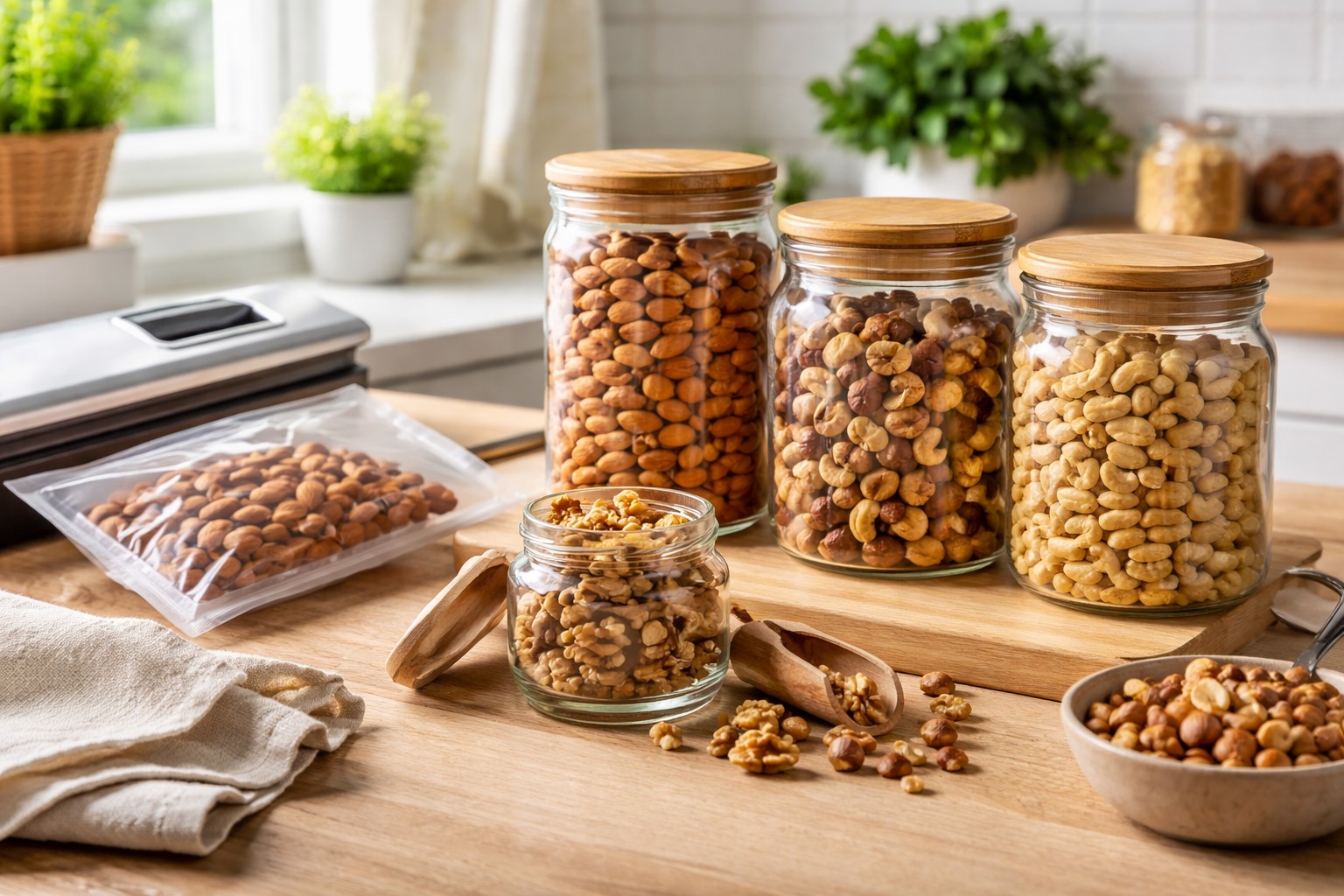
Many people make the mistake of leaving walnuts, hazelnut or almond in an open vase on the kitchen table. In such conditions, useful vegetable fats quickly oxidize, which leads to the appearance of unpleasant bitterness and a specific odor. To prevent a valuable product from becoming a source of harmful substances, it is important to follow several key storage rules at home.
The main enemies of any nut are sunlight, high temperature And humidity. Heat causes the oils inside the kernels to break down, so a cabinet over the stove or a windowsill are the worst places to put supplies.
The following solutions are best suited for long-term storage: . Glass jars with a tight lid – they do not allow foreign odors to pass through and protect against insects. . Vacuum containers — the absence of oxygen slows down the process of fat oxidation as much as possible. . Fridge – an ideal place for peeled kernels, where they retain their taste for up to six months. . Freezer — allows you to extend the shelf life of the product to a year or more without loss of nutritional properties.
If you prefer to buy unshelled nutsremember that the shell is nature’s best packaging. However, even in “armor” the fruits need coolness and dryness. Before sending the batch for storage, carefully inspect the kernels: there should be no dark spots, plaque or traces of mold on them. One damaged copy in a closed container can infect the entire contents.
Particular attention should be paid pine nutssince they deteriorate faster than others due to their extremely high oil content. It is recommended to keep them exclusively in the cold and eat them first. Compliance with the temperature regime and the use of airtight containers guarantees the preservation of all tastes and vitamins.
About the Author