Clogged sink and unpleasant aroma from pipes is an eternal household problem that arises at the most inopportune moment. Usually it’s to blame fatty depositsfood debris and small debris that accumulate on the walls of the siphon. If the water begins to drain slowly, it is not necessary to immediately run for aggressive alkali, which can damage old plastic pipes. There are proven ways to return throughput sewerage, using what is always on hand in the kitchen.
Most often, the reason lies in deep contamination of the water seal, where a dense plug forms. To effectively dissolve the blockageyou can use a simple algorithm of actions:
-
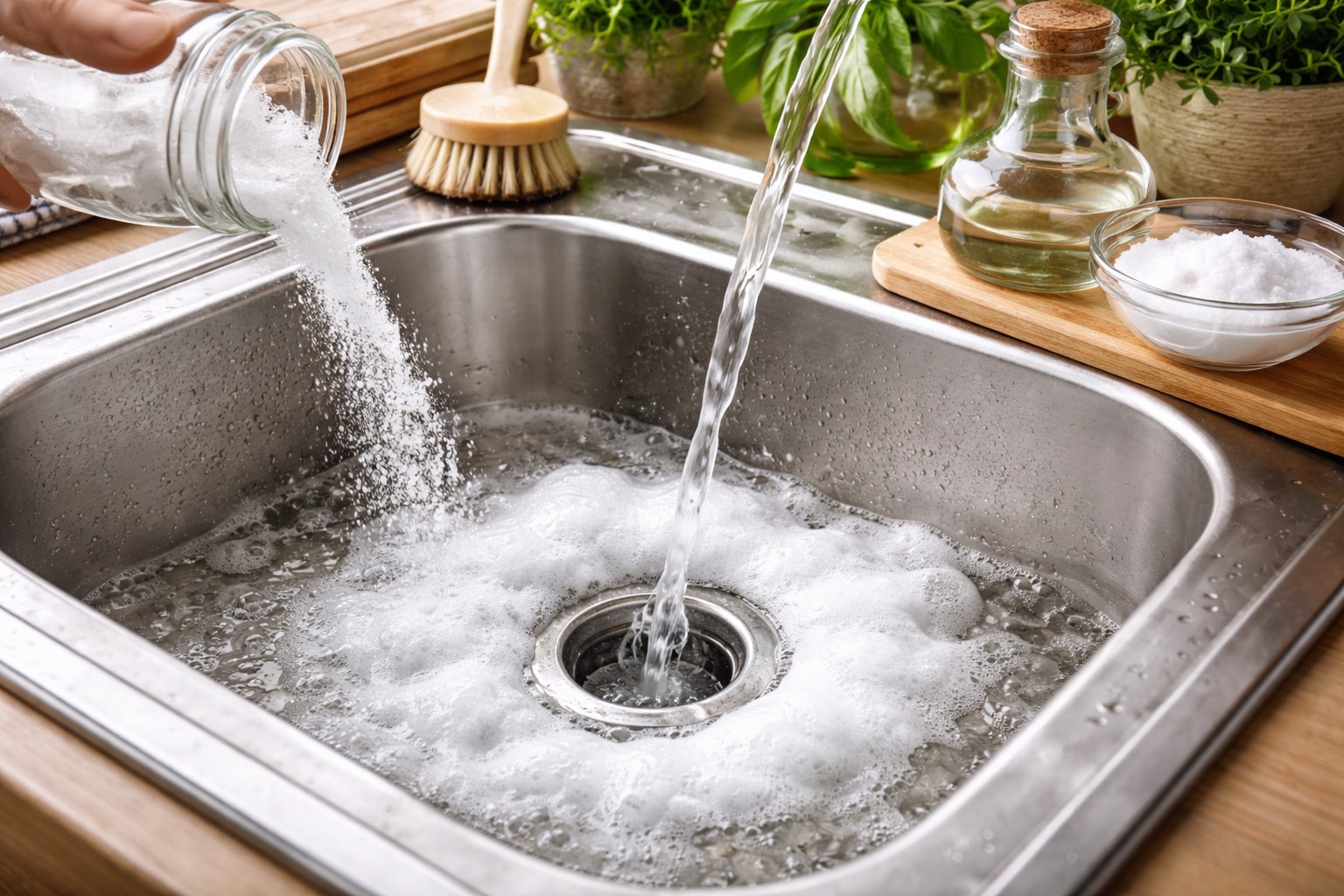
Pour regular baking soda into the drain hole. It does an excellent job of breaking down fats and neutralizing the acidic environment in which bacteria multiply.
-
Pour in table vinegar next. A violent chemical reaction with the release of carbon dioxide literally loosens mud plug from the inside.
-
Close the hole tightly with a stopper or rag for 15–20 minutes so that the concentration of active substances inside the pipe remains maximum.
-
Rinse the drain thoroughly with plenty of hot water to remove any remaining residue.
To prevent problems from occurring, you should periodically use boiling water (if pipe materials allow) or special mesh filters. They hold hair and large particles, preventing them from penetrating deep into the system. Regular cleaning of the siphon itself also helps to avoid stagnation of water and prevents dampness in the kitchen cabinet. Proper care of your plumbing significantly extends its service life and eliminates the need to call a professional.
The cleanliness of the drainage system directly affects the overall hygiene in the food preparation area and the absence of foreign odors in the room.
About the Author