
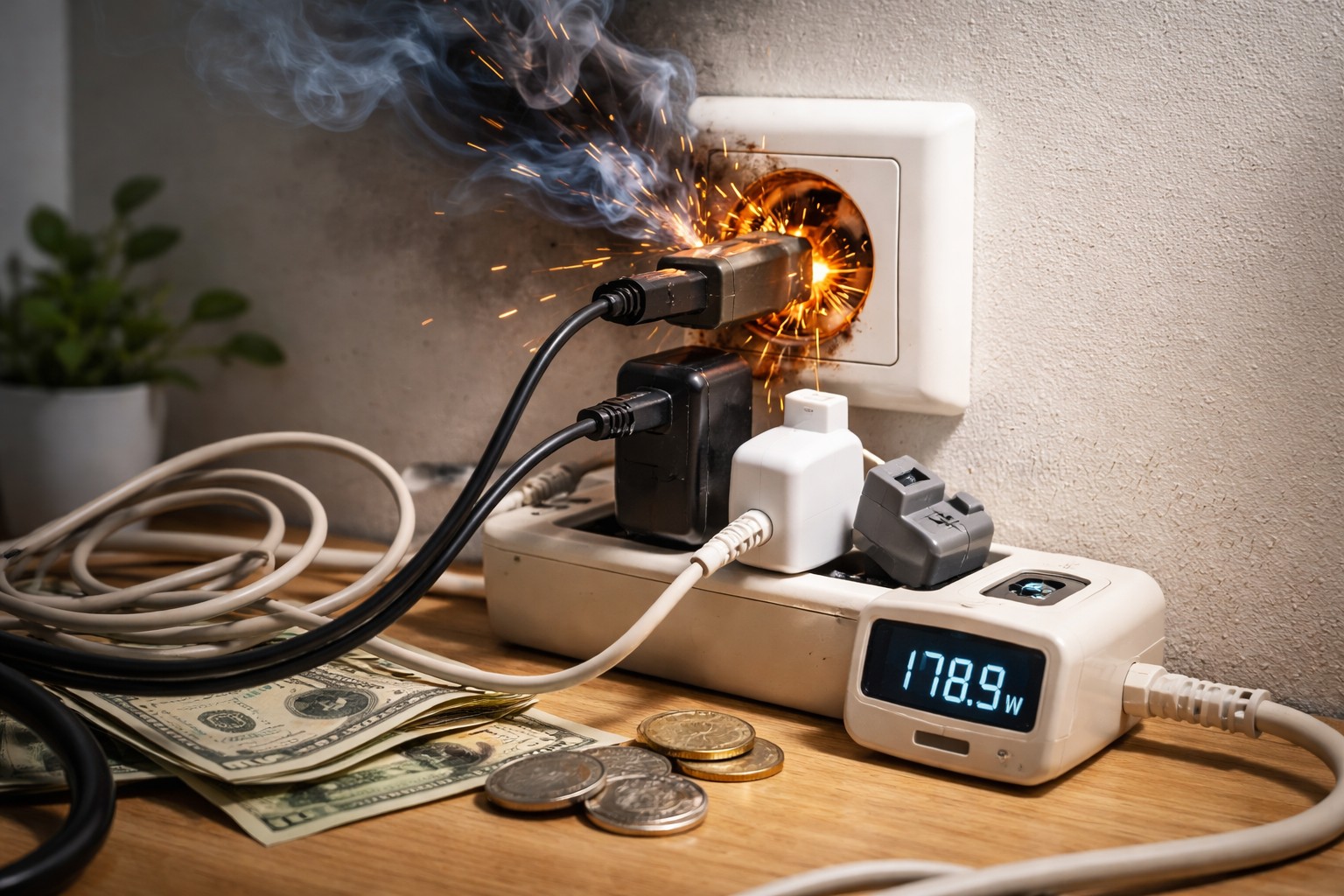
Many are accustomed to leaving equipment plugged in, believing that “standby mode” means almost zero consumption. However, modern studies and utility bills prove otherwise. Leaving a plug in the socket all the time not only takes a toll on your wallet, but also creates invisible risks to the safety of your home.
Saving on “phantom” consumption
Even if the device is turned off with the button, it continues to consume current as long as the cord is connected to the network. This phenomenon is called phantom load.
-
Chargers for smartphones and laptops heat up, consuming energy idle.
-
Microwave ovens and coffee machines spend resources on maintaining the operation of light panels and clocks.
-
TVs and game consoles remain ready to start quickly, which can add up to 10% to your electricity bill over the course of a year.
Extending the service life of equipment
Electronic components have a limited resource. Constant voltage on power supplies leads to gradual wear of capacitors.
-
Because of voltage drops In a network, the equipment that is left in the socket is the first to suffer.
-
Disabling devices helps avoid overheating internal elements, especially in older models of equipment.
Fire safety and protection
Statistics show that a significant portion of household fires occur due to faulty electrical wiring or short circuits in sleeping devices.
-
Lightning discharges can damage the entire home network if the devices are not physically de-energized.
-
Heating elements left unattended or low-quality power supplies often become a source of smoke.
Regularly removing plugs from sockets is a simple habit that provides financial benefits and peace of mind over the safety of your property.
About the Author