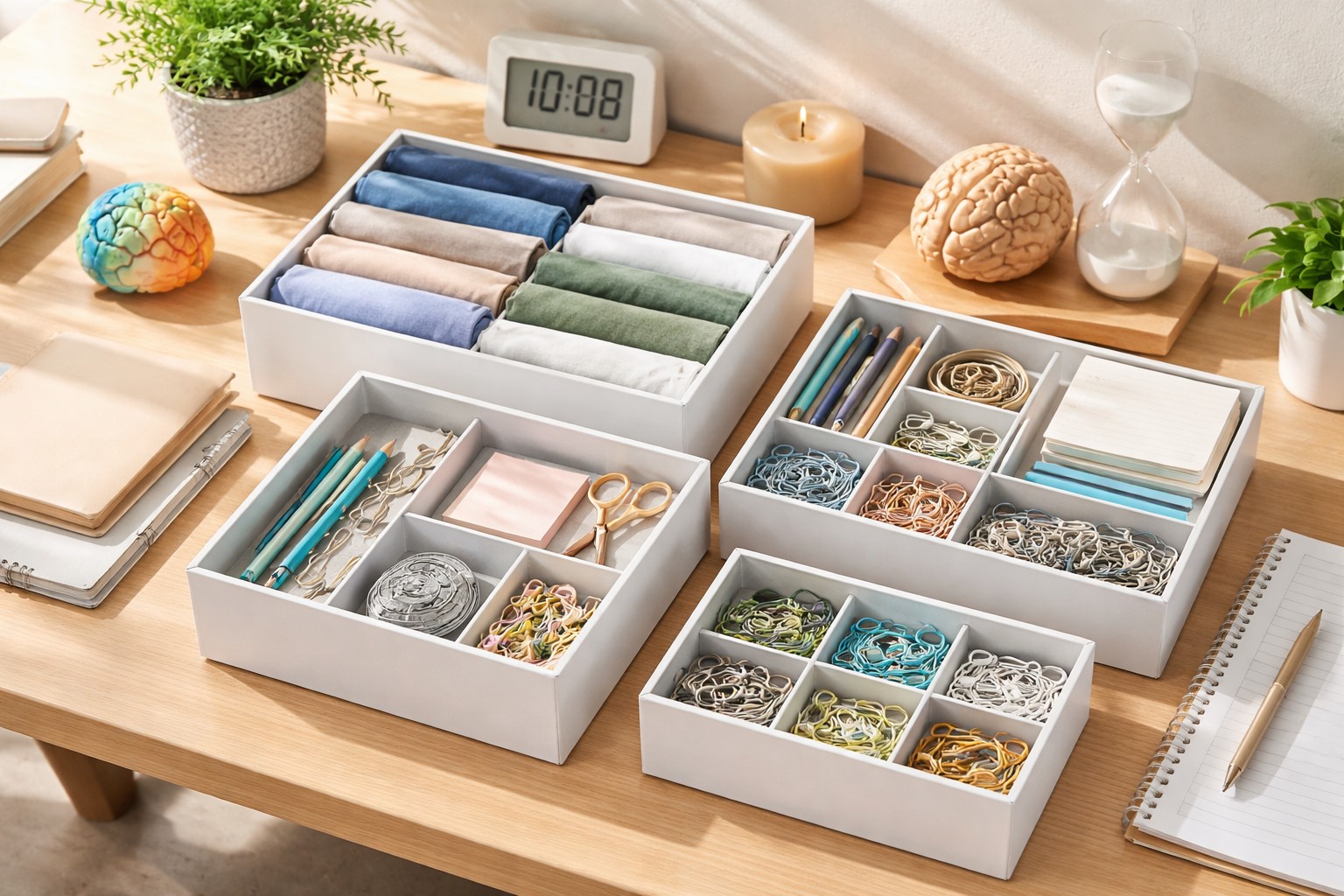
Our brain spends a tremendous amount of energy processing visual noise. When things are mixed up, the cognitive system constantly scans the space, trying to separate what is needed from what is not. Sorting items is not just cleaning, but an effective tool for reducing mental load and restoring internal balance.
Categorizing things works on several levels:
-
Save time: clear distribution into groups eliminates the stage of painful search. You always know where a specific object is, which turns everyday routine into an automatic process.
-
Reduced stress levels: Chaos around you often triggers the production of cortisol. An orderly environment creates a feeling of control over your own life and a safe space.
-
Space optimization: When items are grouped, their actual number becomes apparent. This helps to get rid of duplicates in time and stop making impulse purchases.
-
Hygiene and safety: the correct proximity of things extends their service life. For example, separating products in the refrigerator or tools in the workshop prevents spoilage and mechanical damage.
The classification process helps develop analytical thinking. By deciding which category to classify an item into, a person trains the skill of prioritization, which is then easily transferred to work tasks and planning the day. Systematic approach to organizing everyday life allows you to free up resources for creativity and relaxation.
Keeping your closet or desk organized directly impacts your ability to concentrate on important goals. By surrounding himself only with necessary and clearly structured things, a person creates a predictable and comfortable environment. Proper distribution of resources and objects around becomes the foundation for high productivity and psychological comfort in the long term.
Sorting turns the surrounding chaos into a logical coordinate system.
About the Author