An unpleasant aroma from your favorite pair is not a death sentence and not a reason to buy new shoes. The problem most often lies not in the material, but in the life activity microorganismsfor whom the warm and humid environment inside the shoe becomes an ideal home. To effectively solve the problem, you need to act in two directions at once: eliminate excess moisture and neutralize sources of odor.
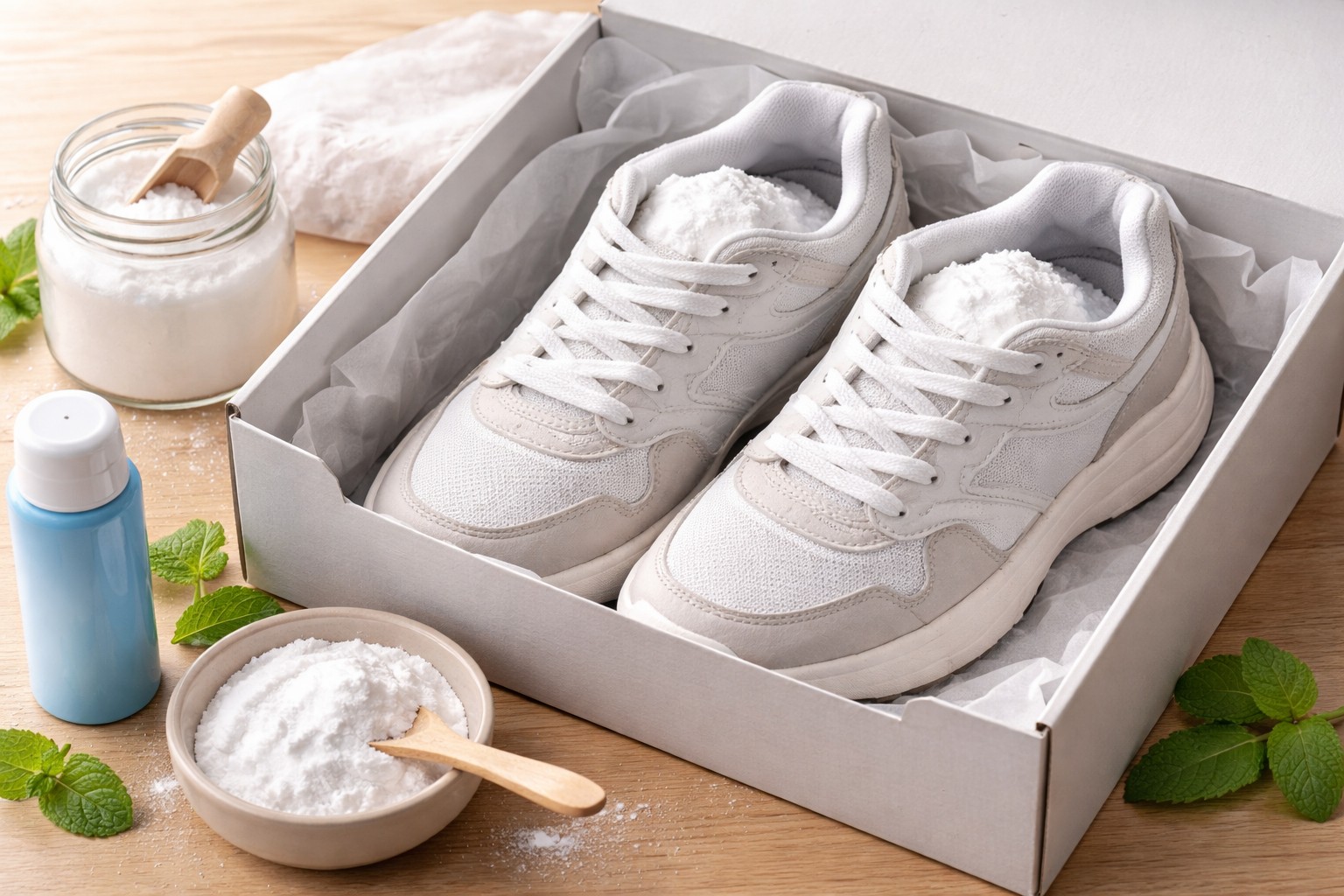
One of the most accessible and effective means is the usual baking soda. She acts as a powerful adsorbentwhich literally absorbs molecules of unpleasant odor and excess condensation. It is enough to pour a small amount of powder inside and leave for several hours, then carefully shake out the remains.
For those who are afraid of direct contact of the powder with the material, there are proven methods:
-
Using activated carbon, which does an excellent job as a filter.
-
Dry tea bags (it’s best to take black tea without additives) that quickly absorb moisture.
-
Freezing: Low temperatures have a detrimental effect on most bacteria that cause a specific amber.
-
Application of special antiseptic sprays based on chlorhexidine or hydrogen peroxide.
-
Peppermint or tea tree essential oils, which have natural antibacterial properties.
It is important to remember about prevention, because dealing with the consequences is always more difficult than preventing them. Regular use electric dryers after each exit to the street helps to maintain the correct microclimate. It is also worth paying attention to the insoles – replacing them with options with a charcoal layer or genuine leather will significantly extend the life of any pair.
Cleanliness and dryness are the main conditions for maintaining foot hygiene and durability of materials.
About the Author