Choosing a cleaning composition is not just a matter of cleanliness, but also the key to the longevity of your interior. An error in the selection of chemicals can lead to irreversible damage to expensive materials: from swelling of the laminate to tarnishing of natural stone. In order for surfaces to retain their original appearance for years, it is important to take into account their physical properties and reaction to external stimuli.
Basic rules for caring for popular coatings:
-
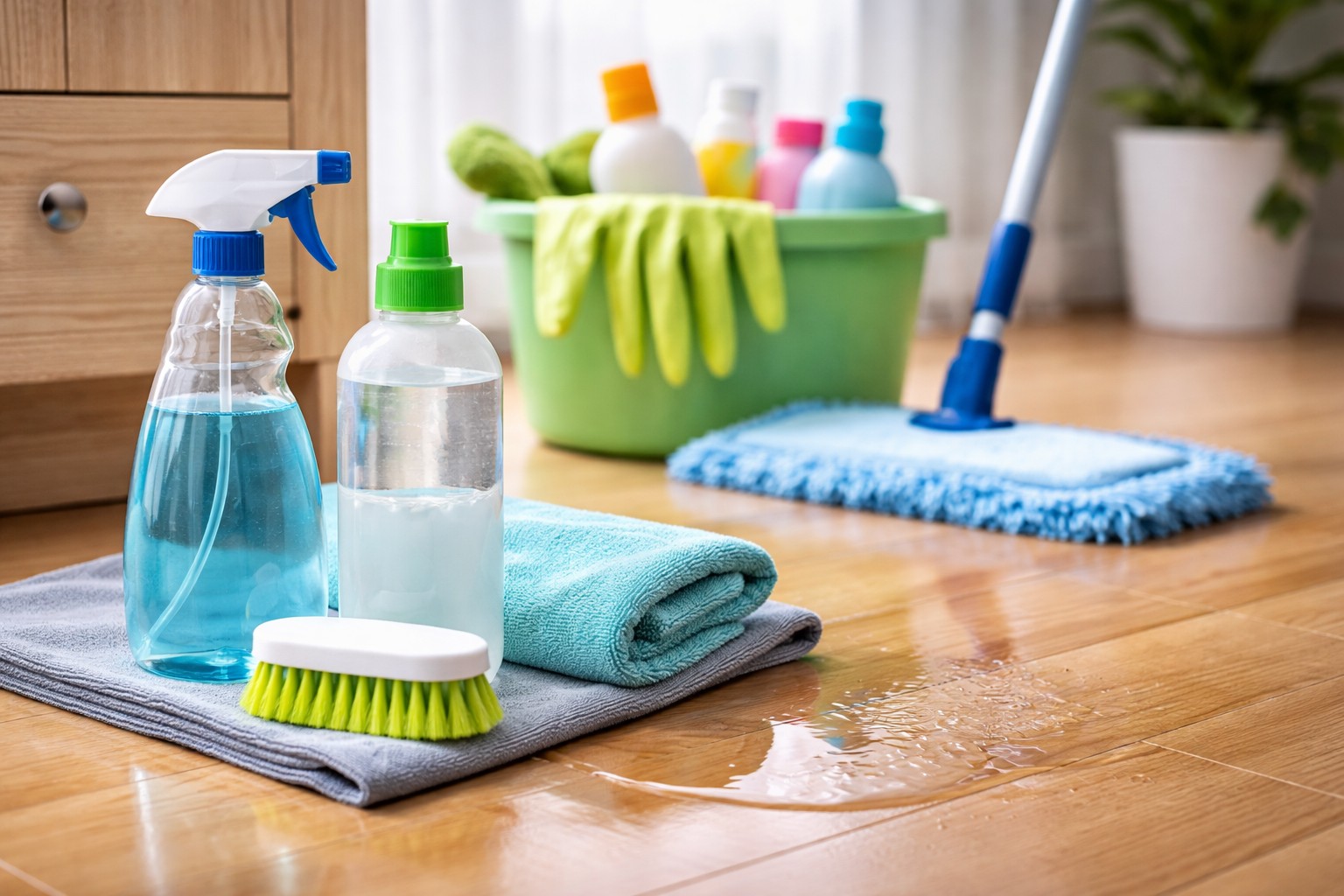
Laminate and parquet. These materials are extremely sensitive to excess moisture. Specialized compounds marked “for wood” that do not contain aggressive alkalis are ideal for them. Such floors should be washed with a well-wrung cloth made of microfiberso that water does not flow into the joints.
-
Ceramic tiles and porcelain tiles. The most unpretentious surfaces that can withstand almost any household products. However, for shine and the absence of streaks, it is better to use alcohol-containing solutions or ordinary warm water with the addition of citric acid.
-
Natural stone (marble, granite). Acids and abrasives are strictly prohibited here. Even a drop of lemon juice can leave a cloudy stain on polished marble. Use only pH-neutral cleaners and soft sponges.
-
Glass and mirror surfaces. The main enemy here is lint and soap stains. The best results are obtained using products based on isopropyl alcohol combined with lint-free wipes that instantly evaporate moisture, leaving the surface transparent.
-
Glossy furniture fronts. Such coatings are easily scratched even with the hard side of a sponge. A light soap solution and polishing with a dry soft cloth are sufficient to remove fingerprints and dust.
A systematic approach to cleaning involves not only removing visible dirt, but also creating a protective layer. Modern polishes based on wax or silicone help repel dust and small particles of debris, greatly simplifying the subsequent cleaning process. A competent combination of equipment and suitable chemicals allows you to maintain perfect order without the risk of damaging the structure of finishing materials.
Each coating requires an individual approach to maintain its aesthetic and performance characteristics for many years.
About the Author