In the hospitality and home improvement industry, there is an invisible line between simply clean dishes and impeccable service. It’s about polishing cutlery. This process is often perceived as excessive perfectionism, but it directly affects the perceived taste of food and the level of hygiene.
Aesthetics and first impression
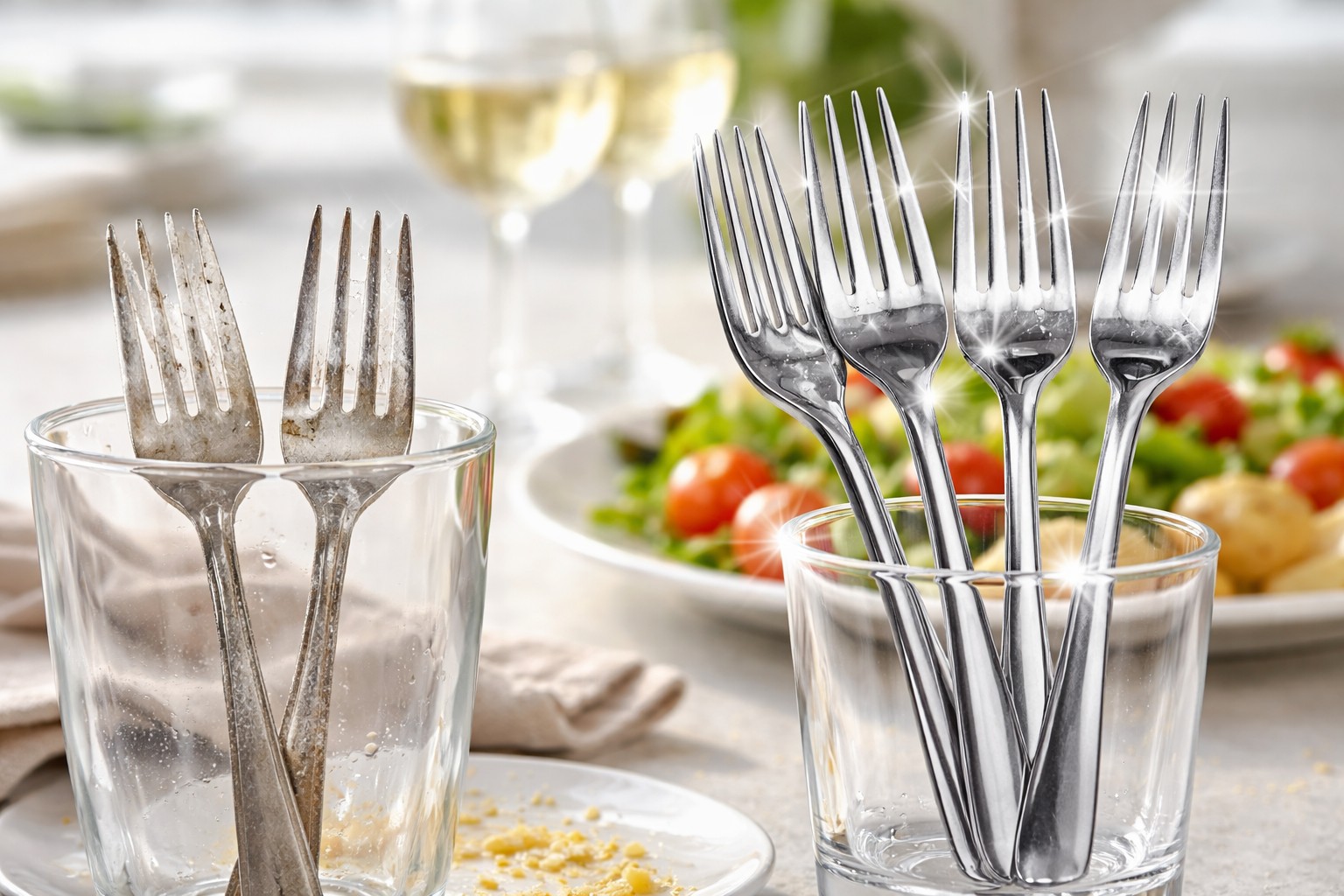
The first thing a guest sees when sitting down at the table is serving. The reflection of light on steel surfaces creates a feeling of celebration and purity. Cloudy spots from dried water, known as limescalecan create a false impression of carelessness, even if the forks have just been removed from the dishwasher. Mirror shine metal emphasizes the status of the establishment or the hospitality of the owner of the house.
Hygienic aspect
Polishing is not only about beauty, but also about additional safety control:
-
Wiping with a dry towel removes any remaining residue. detergents and mineral salts.
-
Contact with a soft cloth allows you to notice the smallest contaminants that the equipment missed.
-
Removing moisture prevents bacteria from multiplying in humid environments.
Preserving the durability of the metal
Regular maintenance of stainless steel or silver appliances helps prevent corrosion. The minerals contained in hard water, when dried, can destroy the protective layer of the metal over time, causing dark spots and microcracks to appear. Timely removal of drops preserves the original appearance of products for decades.
Psychology of taste perception
Research in gastrophysics shows that the visual characteristics of the tools we eat influence taste buds. A heavy, perfectly polished device subconsciously increases the value of a dish in a person’s eyes. Food feels better and more sophisticated when touched by perfectly smooth surfaces.
To achieve perfect results, professionals use the “steam boost” method, or polishing the appliances while they are still hot after washing. This allows you to instantly evaporate any remaining moisture without leaving streaks. Proper care of the parts turns an ordinary meal into a full-fledged ritual.
About the Author