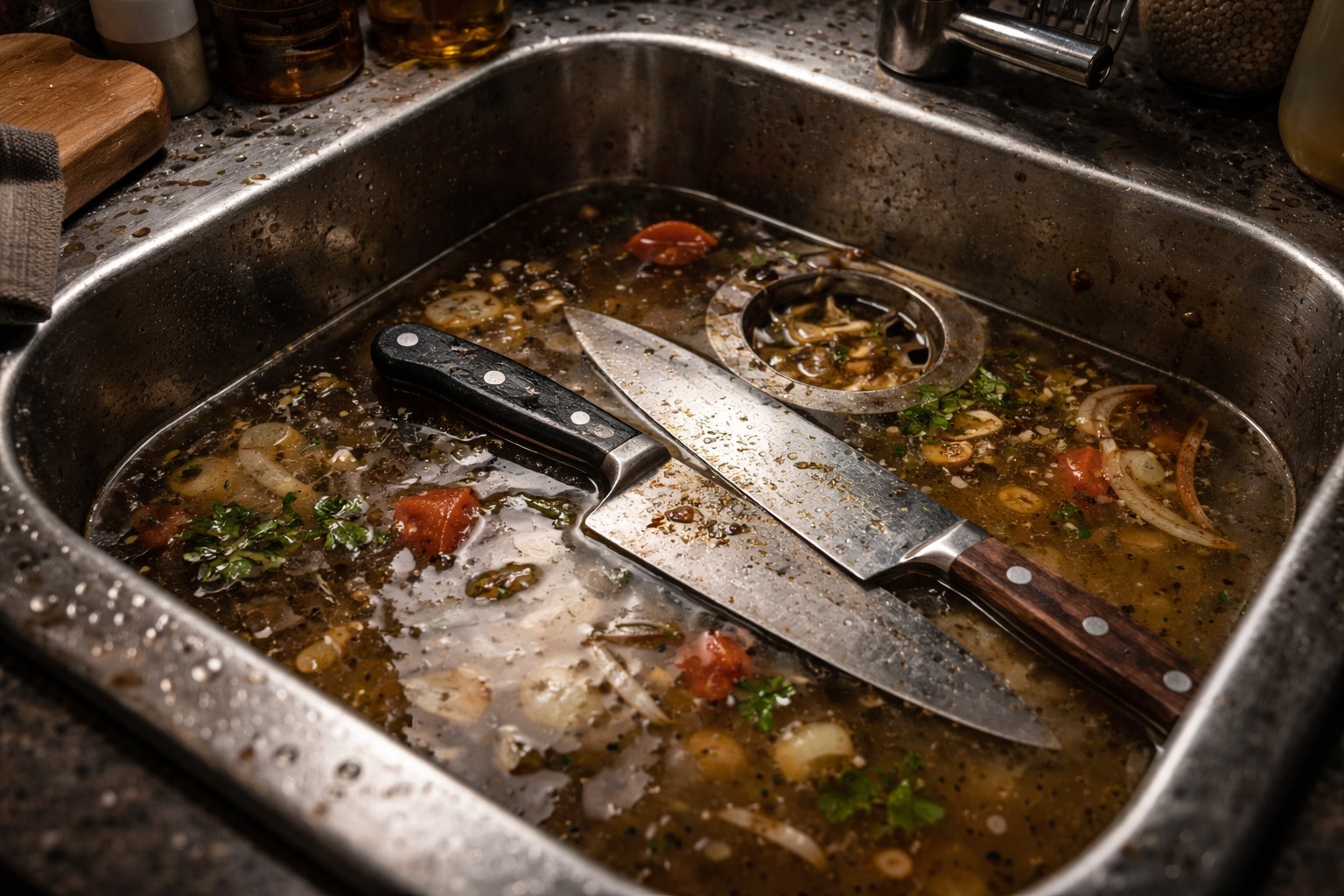
The habit of putting off washing dishes until later can result in serious problems for your kitchen equipment. This is especially true for knives, which are the most delicate and important tool in any cook’s arsenal. There are several good reasons why cleaning your blade should occur immediately after finishing work or eating.
The main threat to metal is corrosion. Even if your knife is made of stainless steel, it is not 100% protected from aggressive environments. Leftover food containing acidssalts and moisture, trigger the oxidation process. Over time, dark spots or small spots of rust appear on the surface, which destroy the structure of the alloy.
Another important aspect concerns maintaining sharpness:
-
When food juices dry, they form a hard crust that is difficult to remove without the use of abrasive sponges.
-
Rough brushing and scraping of food debris causes microscopic damage cutting edge.
-
Prolonged exposure to water or proximity to other dishes in the sink leads to dulling of the blade due to accidental impacts.
Hygiene plays an equally important role in this matter. A dirty knife becomes an ideal breeding ground bacteria. The porous structure of some handles, especially wooden handles, quickly absorbs organic particles, which can lead to unpleasant odors and mold growth. If a knife is used to cut raw foods, the risk of cross-contamination increases significantly if the tool is not cleaned in a timely manner.
Proper care involves a quick rinse under running water and the mandatory use of a soft towel. Storing the knife dry prevents the handle from breaking and maintains the original sharpening for many years. Timely attention to detail eliminates the need for frequent blade restoration and the purchase of new tools.
Taking care of kitchen utensils directly affects the quality of food preparation and safety in the kitchen.
About the Author