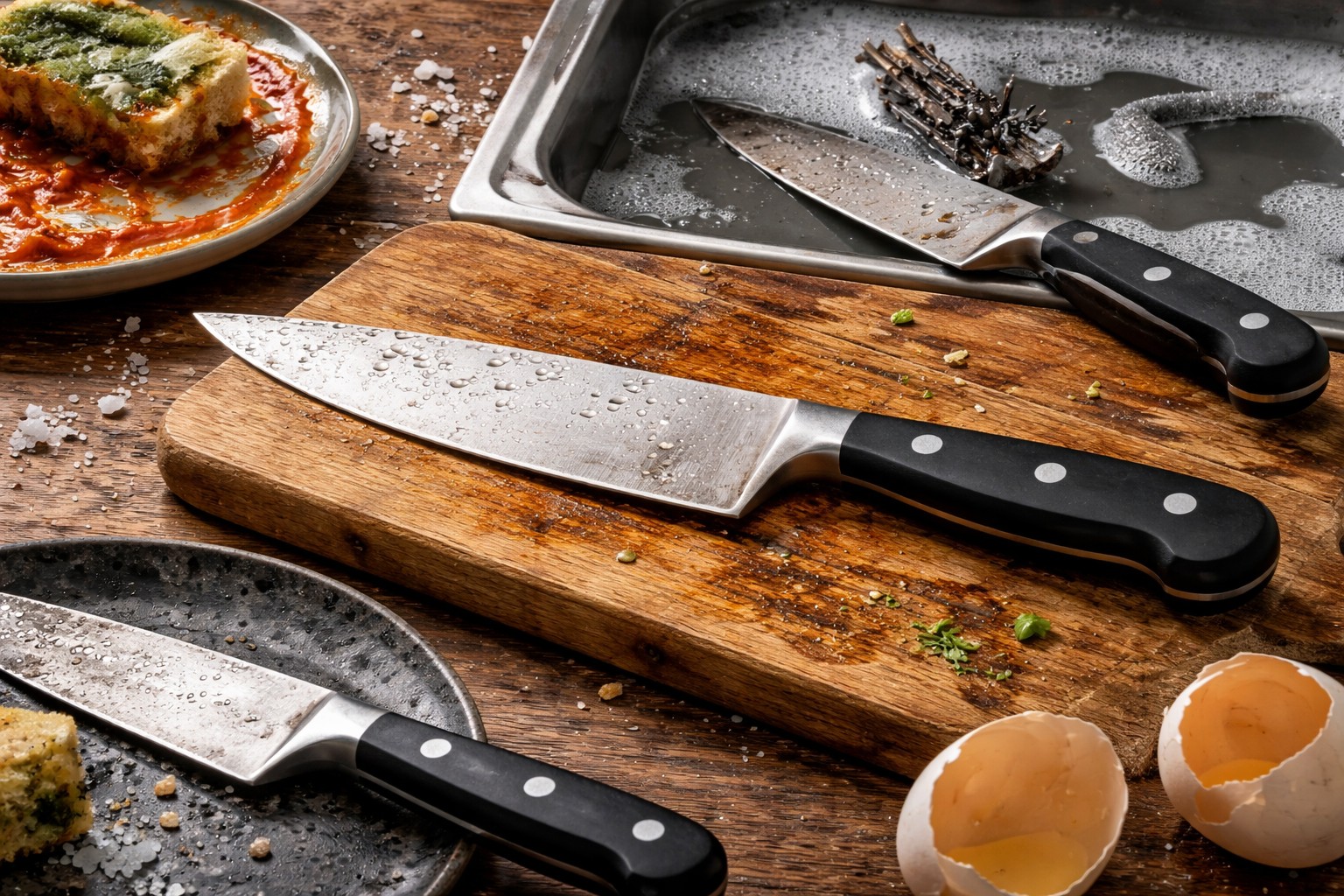
Even the most expensive high-carbon steel knife can turn into a useless piece of metal after just a couple of weeks of misuse. Most people attribute a bad cut to poor sharpening quality, but the real reason often lies in everyday household rituals. In order for the blade to remain razor sharp longer, it is important to understand what factors provoke microscopic chips and bending of the cutting edge.
The main enemies of spiciness in your kitchen:
-
Glass and stone boards. Using hard surfaces is the fastest way to take a knife out of sharpness. With each contact, the thin edge of the blade is literally flattened against a surface that is harder than steel itself.
-
Dishwasher. Aggressive detergents combined with high temperatures cause metal corrosion. In addition, under the pressure of water, knives can come into contact with other utensils, which leads to the appearance of nicks.
-
Storage in a common box. When knives are piled up with forks and spoons, they constantly bump into each other. To maintain the integrity of the blade it is necessary magnetic holder or a special wooden stand.
-
Frozen food slicing. When you try to cut a piece of ice or a bone, you expose the steel to extreme loads that the kitchen tool is not designed to withstand. This results in serious damage that cannot be corrected by regular straightening.
-
Hot water. Prolonged exposure to boiling water negatively affects the structure of some alloys and can damage the material of the handle, which over time causes the blade to become loose.
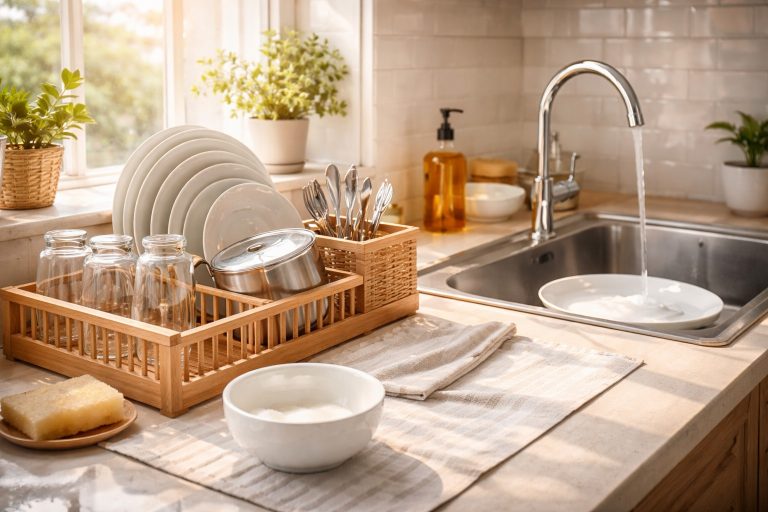
Proper care begins with choice wooden or soft plastic boardwhich slightly absorb the shock. It is also important to get into the habit of washing your knife immediately after use by hand, wiping it dry with a soft towel. Regular straightening with musat helps maintain the geometry of the edge, postponing major sharpening for many months.
Taking good care of your kitchen equipment greatly simplifies the cooking process and extends the life of your favorite tools.
About the Author