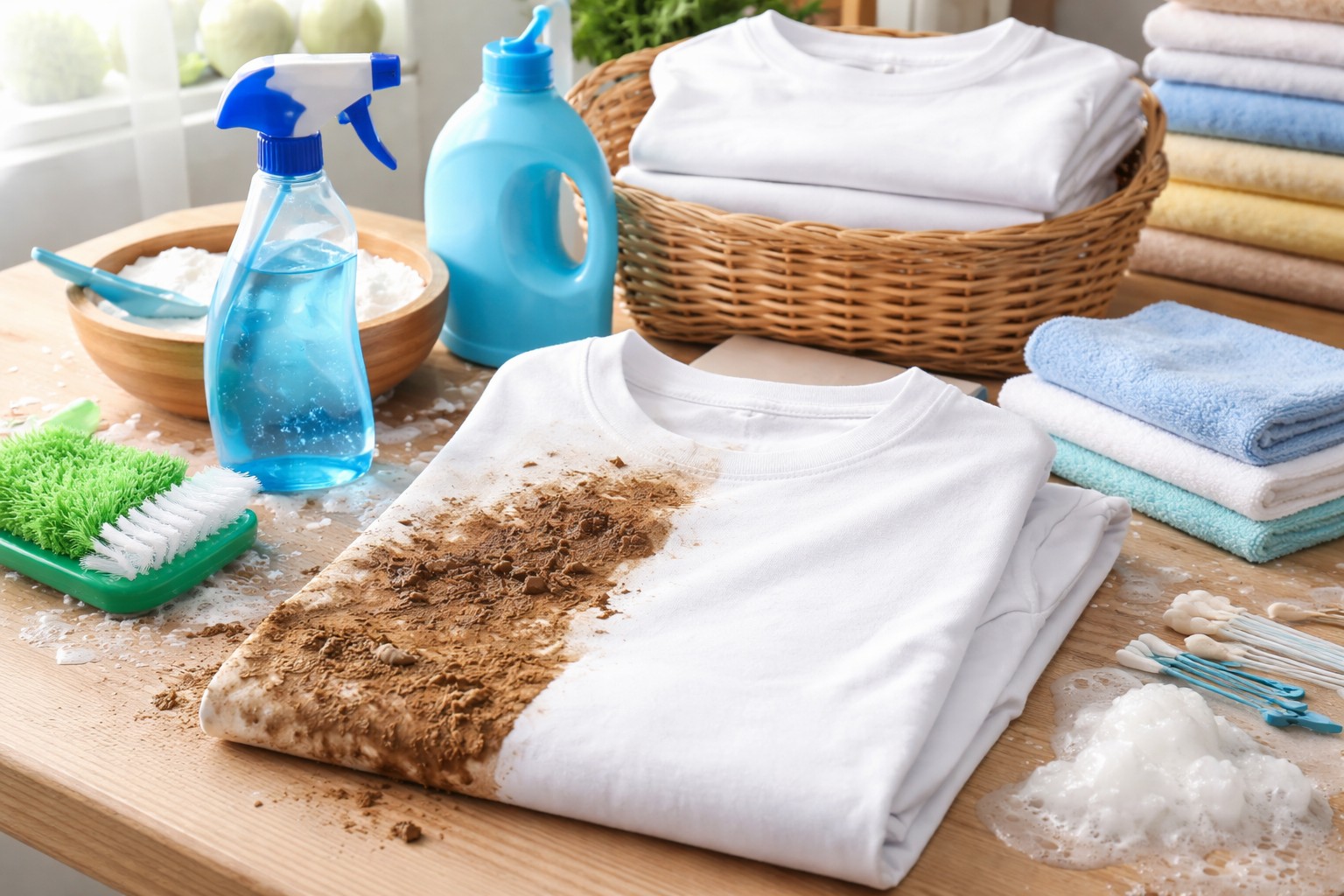
Clean clothes after a walk in bad weather is not luck, but knowledge of the correct algorithms. Dirt stains are insidious because they contain a mixture of organic matter, minerals and soil dyes, which, if handled incorrectly, become firmly embedded in the fibers of the fabric. In order not to completely ruin the item, it is important to follow the sequence of actions tested by professionals.
Basic rules for combating street pollution
The main mistake most people make is trying to wipe off fresh, wet dirt with a napkin. This only drives soil particles deeper into the structure of the threads. Instead, you should stick to the following tactics:
-
Let the mud dry. Dry particles are much easier to separate from the surface without smearing them over clean areas.
-
Mechanical cleaning. Use a soft brush to gently brush away the underlying layer of dried soil.
-
Temperature regime. Never use hot water in the first stage – it “cooks” the proteins and tannins contained in the soil.
Effective marks removers
Each type of fabric has its own proven methods that allow you to return the material to its original appearance without a visit to the dry cleaner.
-
Laundry soap. The most reliable way for fresh tracks. The high alkali content effectively breaks down complex contaminants. Simply lather the area and leave it for 15–20 minutes.
-
Hydrogen peroxide. Ideal for white fabrics. It works as a mild bleach, eliminating the gray or yellowish cast left after the main wash.
-
Glycerol. A lifesaver for delicate materials like wool or silk. Heated glycerin perfectly dissolves old stains without damaging the fiber structure.
-
Vinegar solution. Helps neutralize travel agents and salt, which often leave white streaks on dark clothing and shoes.
Secrets of successful washing
After pre-treatment, it is important to complete the process correctly. Usage modern stain removers with enzymes significantly increases the chances of success when machine washed. If the stain is stubborn, you can add a small amount baking soda directly into the drum – this will soften the water and enhance the effect of the main powder.
For fabrics with complex weaves, such as denim or tweed, it is better to use liquid gelssince they are washed out faster and do not leave small grains between the threads. Timely and competent care can significantly extend the life of your wardrobe, even in conditions of active urban use.
The correct choice of cleaning method ensures that the color and strength of the material are preserved for a long time.
About the Author