When you need clean clothes right now, and it’s raining or cold outside, the standard 12-hour wait becomes a problem. Many people are accustomed to hanging laundry on radiators, but this method often damages the fabric or creates excessive humidity in the room. There are several proven ways to speed up the process using available tools and the laws of physics.
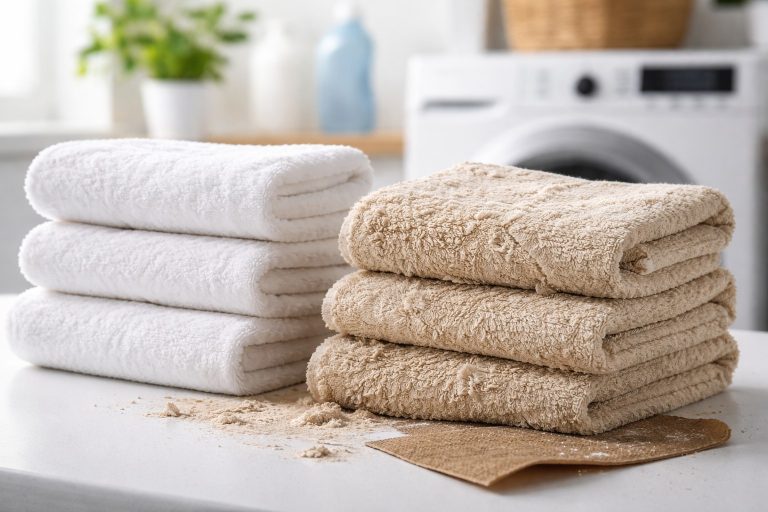
The main secret of quick drying is intensive moisture absorption at the first stage. If the item has just come out of the washing machine, use the roll method with a terry towel. Place the clothing on a dry towel, roll it tightly and press firmly. The towel will act like a sponge, removing up to 40% of the remaining water, which will reduce the drying time by half.
Different tools are suitable for different types of fabrics:
-
Hair dryer Ideal for small items such as socks, T-shirts or underwear. Hold it at a distance of 30 centimeters to avoid damaging the fibers, and constantly move the warm air stream.
-
Oven can be an alternative if you need to dry thick jeans. It is important not to put clothes inside, but to hang them on the back of a chair next to the open and preheated oven. Warm air currents will create a convection effect.
-
Iron with steam function (but in no-steam mode) will help dry wet shirts. Iron the item through a thin cotton fabric so that the moisture evaporates faster without leaving creases.
-
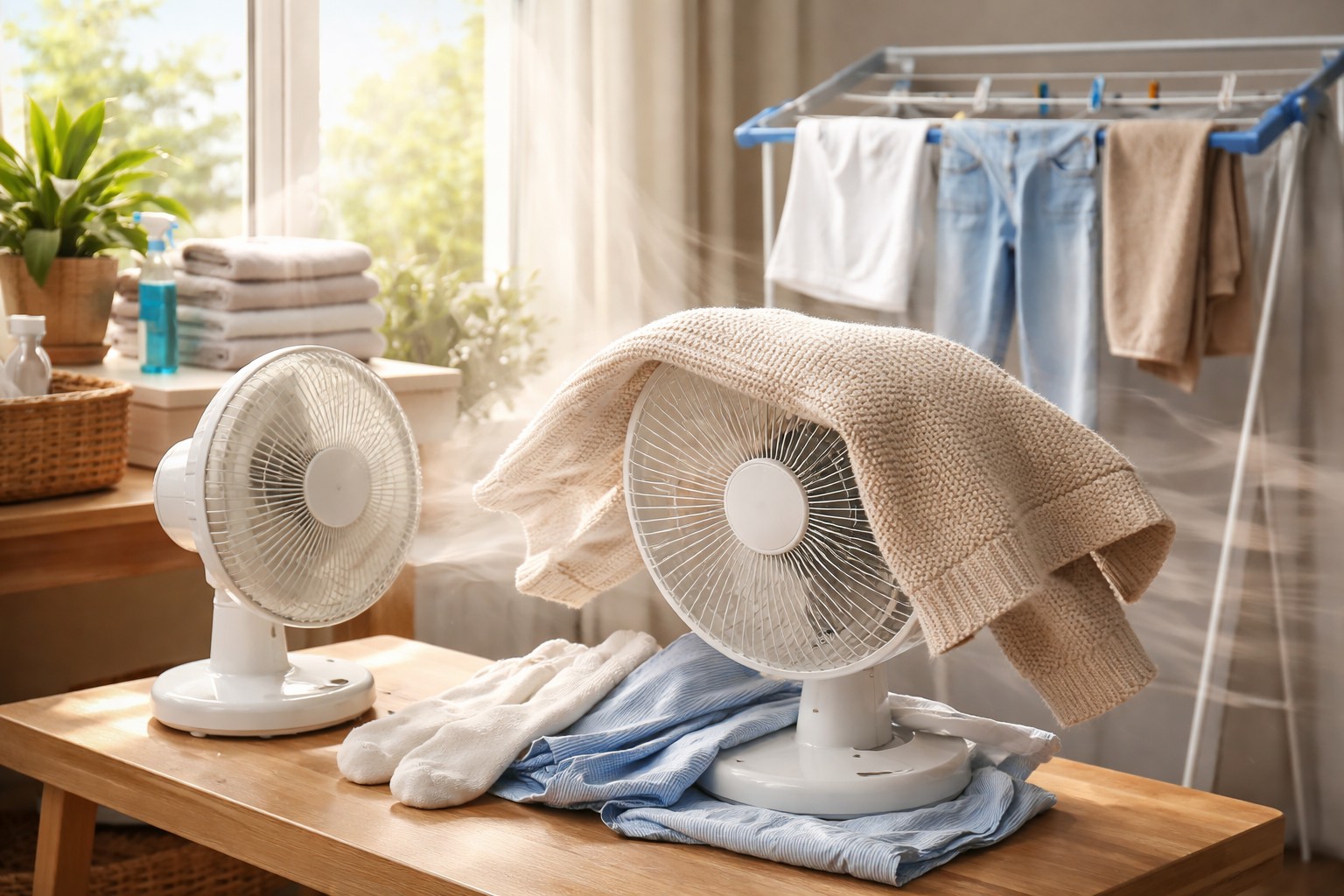
Fan will provide the necessary air circulation if you direct it directly to the clothes dryer. Constant airflow prevents moisture from stagnating in the fibers.
Drying efficiency directly depends on air circulation indoors. Even in winter, it is worth opening the window slightly for ventilation: dry street air absorbs fumes much more actively than stagnant room air. The distance between items on the dryer should be at least 5–10 centimeters so that the currents can pass freely through the fabric.
Correct prioritization and use of heat allows you to prepare your wardrobe for going out in the shortest possible time.
About the Author