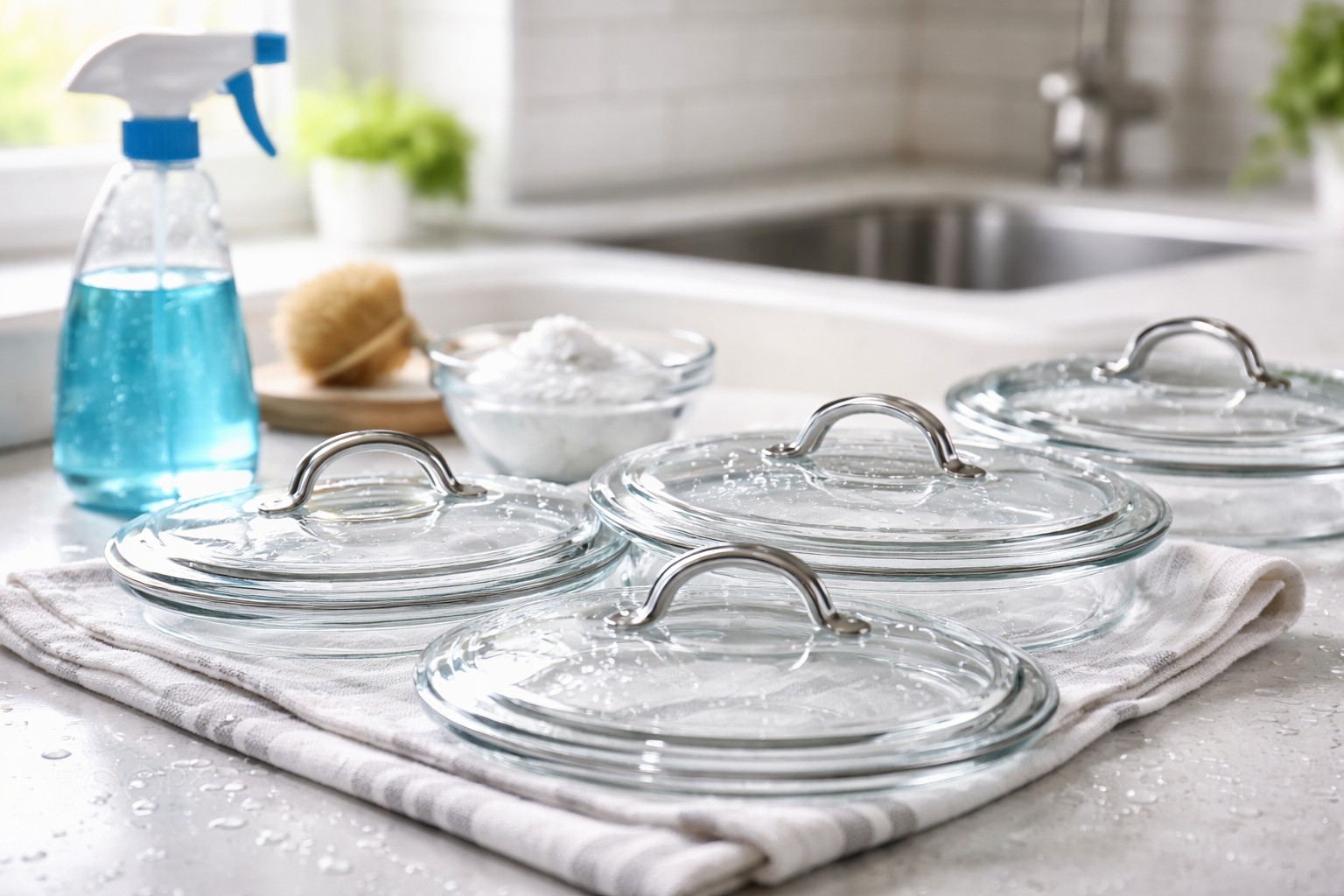
Glass lids from frying pans and saucepans lose their appearance over time: accumulations accumulate under the metal rim. congealed fatand the surface becomes covered with a cloudy coating. Regular sponging often fails to remove stains in hard-to-reach places, but there are several proven methods that will help restore crystal purity without any extra effort.
Dissolving carbon deposits with soda and peroxide
Combination of regular baking soda and pharmaceutical hydrogen peroxide creates an active reaction that effectively breaks down the sticky layer.
-
Mix soda and peroxide until it becomes a thick paste.
-
Apply the mixture to metal bezel and handle attachment points.
-
Leave the composition for fifteen minutes to act.
-
Scrub the joints thoroughly with an old toothbrush to remove any softened grease.
-
Rinse off any remaining product with warm running water.
Cleaning with steam and laundry soap
If the contamination is too strong, the “digestion” method will help. This is the safest way to get rid of old carbon deposits without the use of aggressive household chemicals.
-
Take a deep container that can fit the lid completely.
-
Grate laundry soap and dissolve it in boiling water.
-
Add a little to the water office glue (silicate) is an old proven secret for dealing with burnt oil.
-
Place the lid into the solution and simmer over low heat for ten minutes.
-
After this procedure, the dirt easily comes off even with simple movements of the sponge.
Removing cloudy deposits with vinegar
In order for the glass to become transparent again and the white streaks from hard water to disappear, you must use acidic environment.
-
Soak a napkin in the table solution vinegar or citric acid.
-
Wipe the entire surface of the glass, paying attention to the edges.
-
To consolidate the result, you can use a solution of ammonia, which gives a characteristic mirror shine.
Subtleties of detail care
Particular attention should be paid to plastic or wooden handles. If the design allows, it is better unscrew the handle before general cleaning. This will allow you to completely clean out the grease that gets clogged into the threads and under the base of the fastener. If the handle is not removable, use a wooden toothpick or a cotton swab dipped in an alcohol solution to clean the gaps.
Regular use of these methods prevents stubborn stains and extends the life of your kitchen utensils. Clean dishes not only look aesthetically pleasing, but also ensure hygienic cooking on a daily basis.
About the Author