Proper care of your flooring is not only a matter of hygiene, but also a way to significantly extend the life of the materials. Many people make the mistake of using universal aggressive agents that destroy the structure over time. laminatewash out the color parquet or leave a whitish coating on porcelain stoneware. The secret of impeccable cleanliness lies in selecting the composition for a specific type of surface and observing the temperature regime of the water.
Each material has its own rules that help avoid deformation and loss of shine:
-
Laminate extremely sensitive to excess moisture. It should be washed with a well-wrung out cloth. microfiberadding a minimal amount of neutral detergent to the water.
-
Wooden floor or parquet require special formulations based on wax or oils, which create a protective layer and prevent the wood from drying out.
-
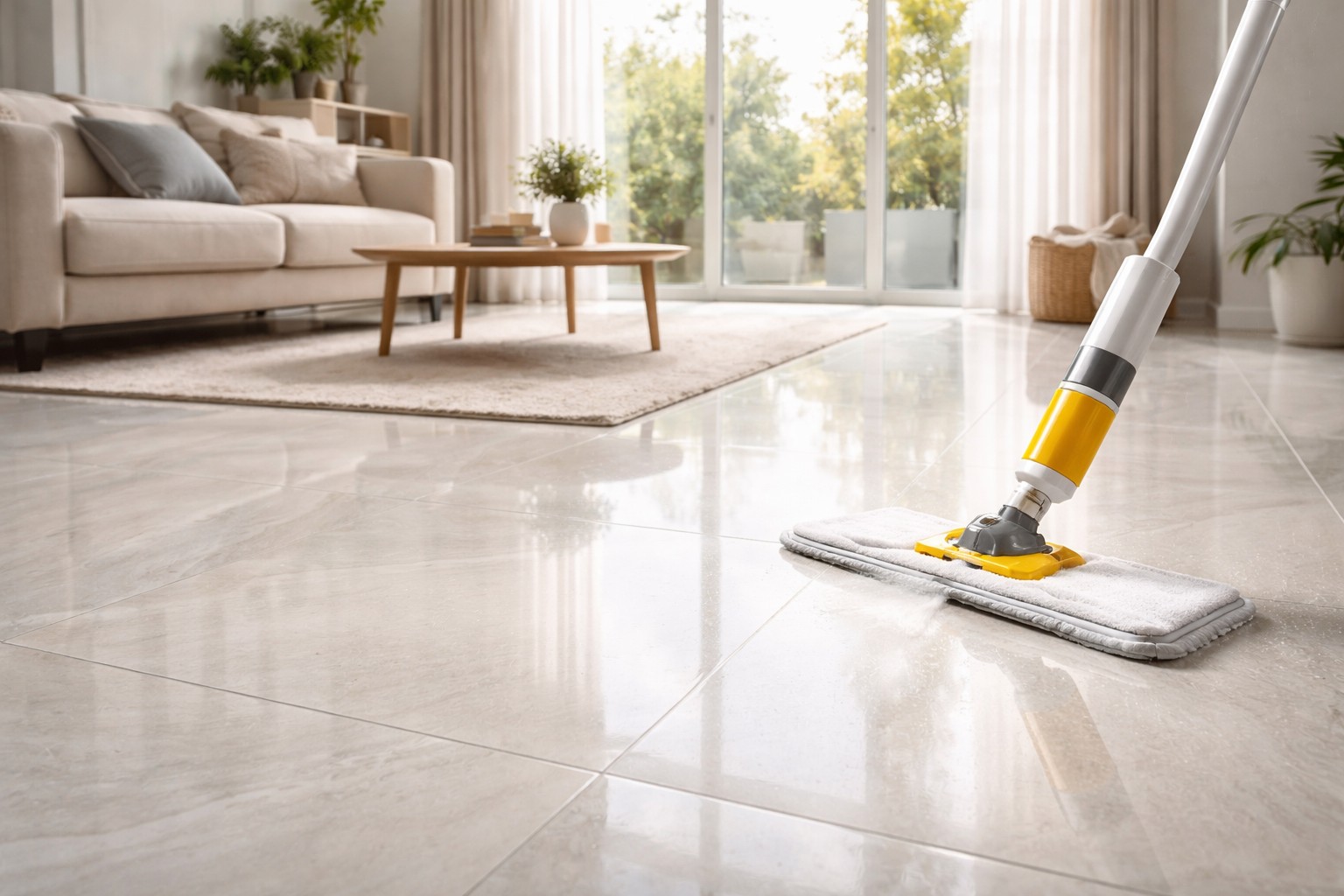
Ceramic tiles And stone are not afraid of water, but do not react well to abrasive powders that scratch the glossy surface. Here it is better to use weakly alkaline solutions.
-
Linoleum can fade from too hot water, so room temperature and a regular soap solution are optimal for it.
The sequence of actions plays an important role. Before wet cleaning, be sure to dry clean with vacuum cleaner or a soft brush so that small grains of sand do not act like sandpaper when rubbed with a mop. Usage distilled water or special conditioners helps to completely eliminate the appearance of streaks, which are especially noticeable on dark and glossy coatings in bright sunlight.
High-quality cleaning always begins with assessing the condition of seams and hard-to-reach places. Properly selected equipment and moderate use of chemicals allow you to maintain the original appearance of the floor for many years. Keeping your home clean depends on understanding the physical properties of the materials from which your flooring is made.
About the Author