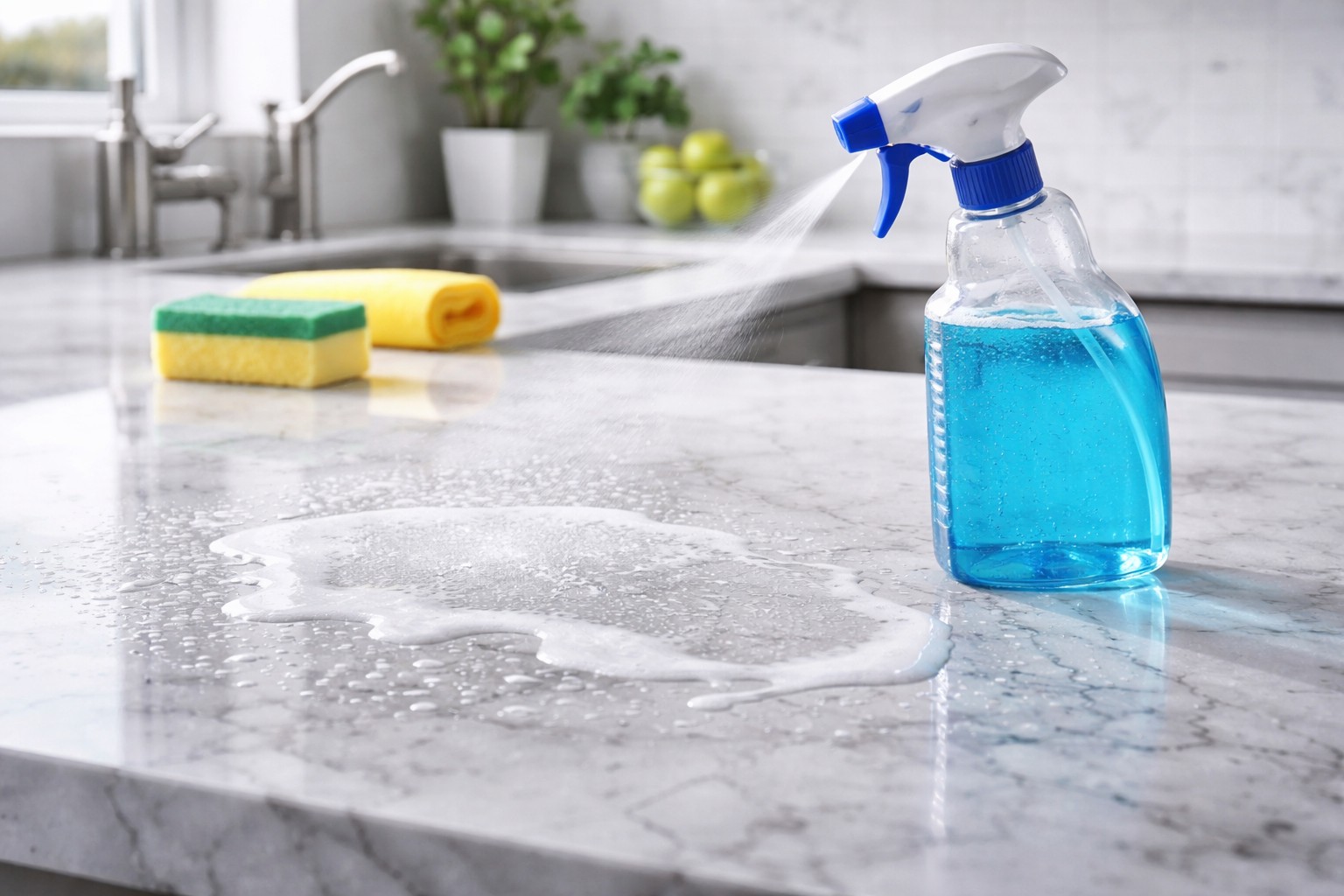
Many are accustomed to doing cleaning “automatically”: take out a bottle, generously spray Place the composition on a table or mirror and start rubbing. It would seem that the more liquid, the cleaner the result. However, professional cleaners and equipment manufacturers unanimously advise: apply the product It is necessary only on a napkin or microfiber, and not on the object of cleaning itself.
This habit is not just a fad, but a way to protect your home from hidden damage and save money.
The main danger of direct processing lies in excessive moisture. When drops get into joints, gaps or microcracks, irreversible processes begin:
-
Swelling of furniture: Chipboard and MDF instantly absorb moisture through the seams, which leads to deformation and peeling of the edges.
-
Damage to electronics: Fine water mist penetrates smartphone speakers, remote control buttons and laptop vents, causing corrosion of contacts.
-
Stains and stains: Direct contact of the concentrated composition with wood or natural stone may leave a “burn” or a difficult-to-remove halo that cannot simply be wiped off.
-
Chemical accumulation: Some of the liquid inevitably remains in hard-to-reach places, creating a sticky layer that attracts new dust even faster.
Using a napkin as intermediary allows you to control the amount of moisture. You work with a damp cloth, which effectively captures dirt without flooding the surface. This is especially critical for glass facades and mirrors, where excess chemicals can get under the amalgam and cause it to darken around the edges.
The economic aspect also plays a role. When sprayed, up to 30% of the product flies into the air, which you end up simply breathing. When applying the composition to a rag, you use exactly as much active substanceas needed to remove the stain.
A careful approach to cleaning significantly extends the life of expensive finishing materials and household appliances.
You can ask me to create a checklist for proper care of glossy surfaces.
About the Author